
Meeting your cooling demands?
Don't replace fans, upgrade them. Oil and gas and industrial fan optimization. BC Hydro retrofit funding. We do zero new construction.A lot of operations aren't. When process gets hot, things slow down and bottleneck. Fan-Div supplies the parts and designs that keep Air Coolers, ACCs, and Cooling Towers from running hot.
- We supply
- Parts & design
- Based in
- Calgary & Edmonton
- Parts
- Stocked & sourced
- Combined experience
- 100+ years

Who's behind the design
Nick Agius. The Fan Guy.
In the fan world, one name comes up first. Nick Agius. For the first time, he's teamed up with another company, as our Founding Partner.
- 48 years
- On air coolers, and he's been to every refinery in Canada
- DG-II®
- He designed and patented the DG-II® Anti Rotation Device. Fan-Div is the exclusive Canadian distributor
- E-Bell™
- Creator of the world's first fiberglass adjustable sectional elliptical inlet bell, the E-Bell™, and he introduced it to the aftermarket
Our Results
See all results$2 to 4 million a year in economic profit
68% more airflow after bundle cleaning, fan re-pitching and a higher tip speed.
“We implemented solutions to improve our fan performance and increase production resulting in an economic profit of $2-4 million/year.”
Up to 9°C more cooling, and up to 3°C more from E-Bells™
High efficiency fan upgrade on engine coolers, sped up to 340 rpm, plus E-Bell™ inlet bells.
“Benefits are as high as a 9 degree C difference in cooling.”
The only unit Ops could keep running at 35°C
Cofimco fan blade upgrade.
“In the 35 C weather yesterday, looks like the upgraded unit was the only one Ops could keep running… I am guessing that the improvements are going to be enough that we can rule out future plans to replace our units.”
$1.56 million in value in under four months
Fan capacity upgrade on the SM column coolers, backed by Nick's airflow testing.
“Believe the numbers below are, if anything, understating the value… Excellent work, thank Nick Agius for me please.”
97/98 dBA down to 78/84 dBA, with more airflow
New low noise Cofimco engine cooler fans on two compressor units.
“Both units are running great, noise reduction is night and day difference.”
Outlet gas 20 to 24°C cooler
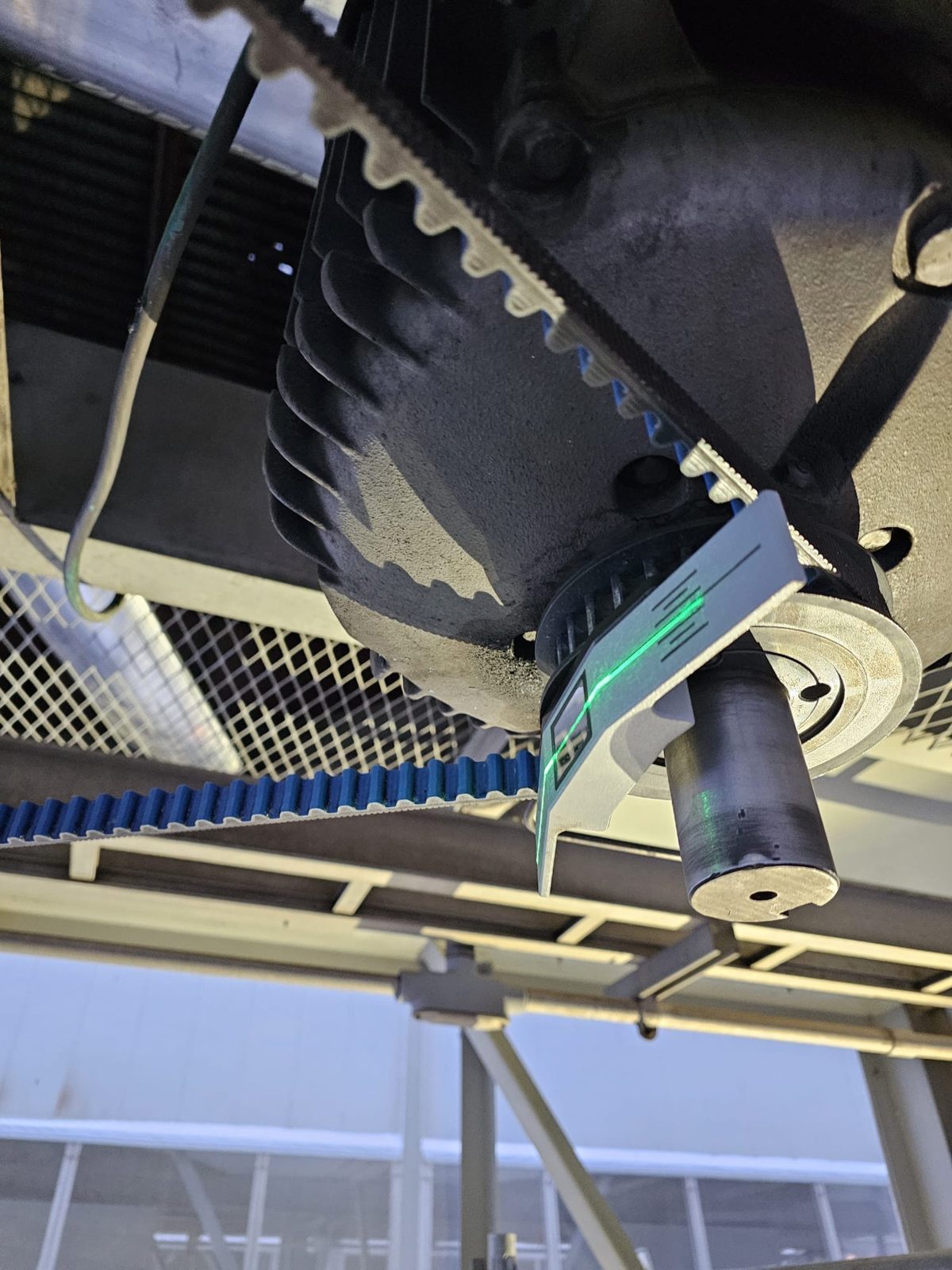
Belt drive upgrade, installed by our field crew.
“We have seen an outlet gas temp reduction of somewhere between 20-24 C lower than it was previous to this upgrade work being conducted.”
+19% cooling duty
Bundle cleaning, higher fan speed, a blade tip change and a tip seal.
“Yes it is +19% cooling duty. A real home run for this cooler.”
Same cooling with 30 A less, about 24 HP saved per fan
Hudson K-6 fan upgrade on a cooling tower, replacing the original fan: 50 A against 80 A for the same cooling, and at 66 Hz it exceeds the original fan's cooling capacity.
“Now are achieving equal cooling with the Hudson K-6 but with 30A less… (24HP saved/fan).”
Flare reduction worth about $270,000 a year
Manual pitch adjustment devices repaired, air side bundle cleaning, pitch adjustment and fan replacement, and the tower adjusted to its new operating pressure.
“All the changes contributed to a flare reduction estimated at $270K/year.”
No production cuts at 34°C
16 fans converted from low efficiency Moore to high efficiency Cofimco-Hudson, tip speed raised from 8,000 to 10,000 fpm, timing belts, inlet bells and DG-II® Anti Rotation Devices.
“We did not have to cut production as the fans did their job this time.”
$250,000 more throughput every summer
Hudson B blades upgraded to the Hudson HC series: 6°C better on 12 fans and 4°C on two more.
“This translates into a $250,000 more throughput for Scotford on our CCR each and every summer from this point forward.”
Approach temperature down 5°C
Air cooler fan upgrade.
“Our approach temp is down 5deg from prior to the upgrade, and our final discharge temp is up only 5deg in the last month, despite the 10deg increase in ambient.”
Full capacity through the summer heat
Two new fans for process and engine cooling, with a 3 to 4 degree improvement.
“We saw a significant change (3-4 degree change) with the new fans. These new fans allowed our operations team to run our units a full capacity in the heat of the summer.”
“On a positive note, the resident nearest the plant noticed a huge difference in noise once we fired back up last September after the turnaround… Nice to know it's having a positive effect on the people in the surrounding area.”
“Initially, you could barely carry on a conversation and now you don't even need hearing protection. The transition from before and after is absolutely amazing!!”
“I wanted to reach out and let you know how happy I was with your team and the support they provided for us last week. I was impressed with how efficient and professional the guys were and will definitely be recommending your support in the future.”
“Every single time I've run into an issue, you've had solutions… I will take any call from anyone regarding your capabilities and mission to help people fix their problems.”
“The inlet bells we installed fit up really well and we have noticed an improvement on cooling. We would like to install these on two other fans in our plant.”
“You guys have showed a great level of skill and professionalism to get this task completed… Thank you nick for all your help and support with resolving all the theoretical and technical questions.”
“I truly appreciate the support you've both provided. Your assistance has been invaluable.”
“I was pretty surprised by how much air it moves… When I stood inside the new E-Bell with the fan running, the difference in airflow was really noticeable.”
“Thank you for all the support… getting our Phoenix fans sorted out leading into the outage. You've been a tremendous ally over the years.”
“I have nothing bad to say only good, Russell and Bryce have helped plenty when we need a quick answer or helping by coming out and going through the existing fans for the upgrades to make sure we get everything correct for the job.”
“Thanks Nick! Been great working with you over the Years and look forward working with you in the future.”
“Please pass on a 'Thank you, and Job well done!' to Mariusz and all the crew that executed another successful upgrade.”
“Overall the work was much needed and I am certain we are realizing benefits.”
How it works
Forced draft or induced draft.
Every Air Cooled Heat Exchanger moves ambient air across a finned tube bundle. The only question is which side of the bundle the fan sits on, and that one decision drives fan power, air distribution, recirculation and how easily you can reach the drive to service it.
 Animation courtesy of OEG LLC (The Operations Excellence Group).
Forced draft puts the fan under the bundle where you can reach it. Induced draft puts it above, which distributes air more evenly. Both are covered by API 661. Read the full comparison, or talk to us about yours.
We supply
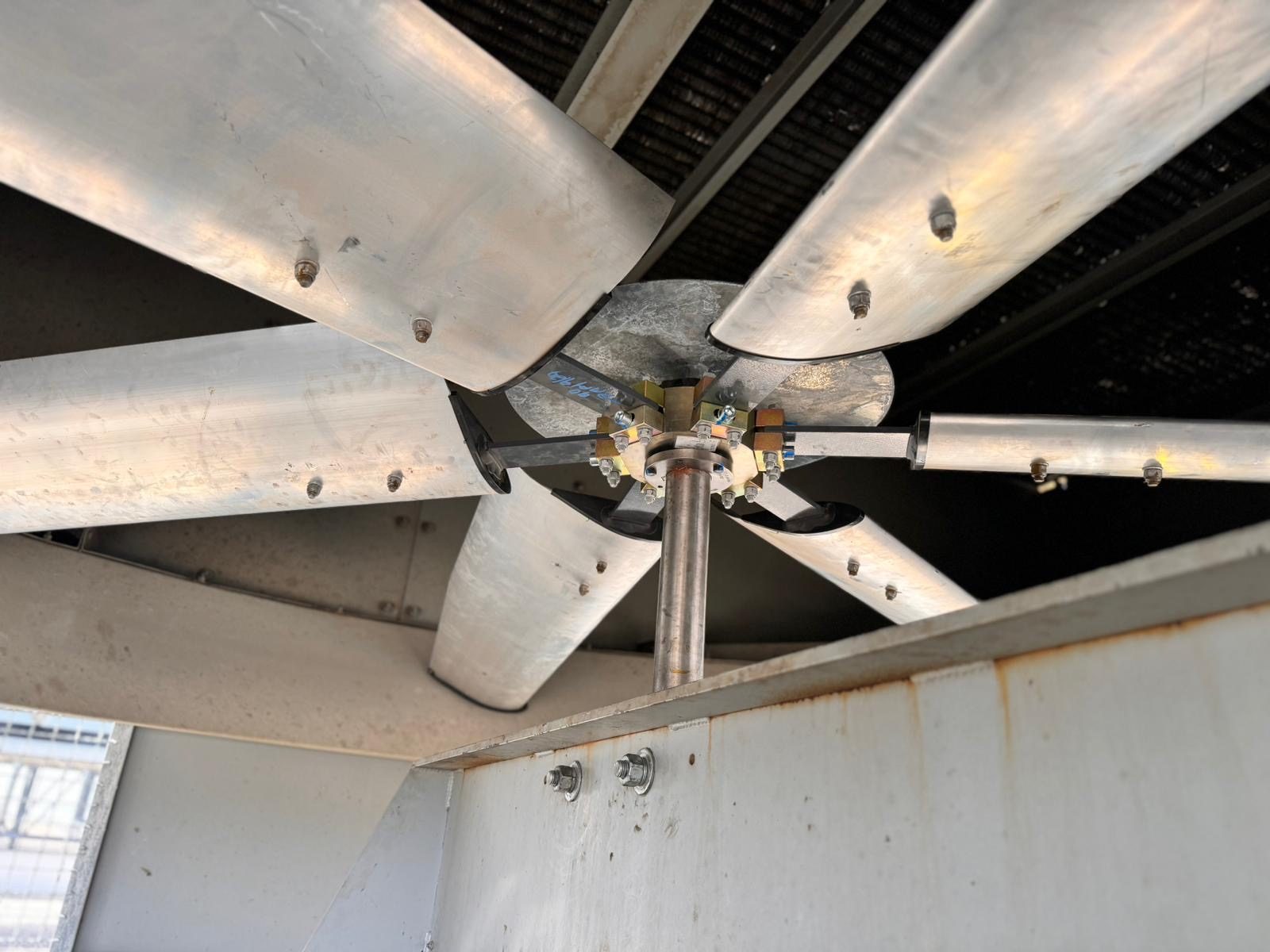
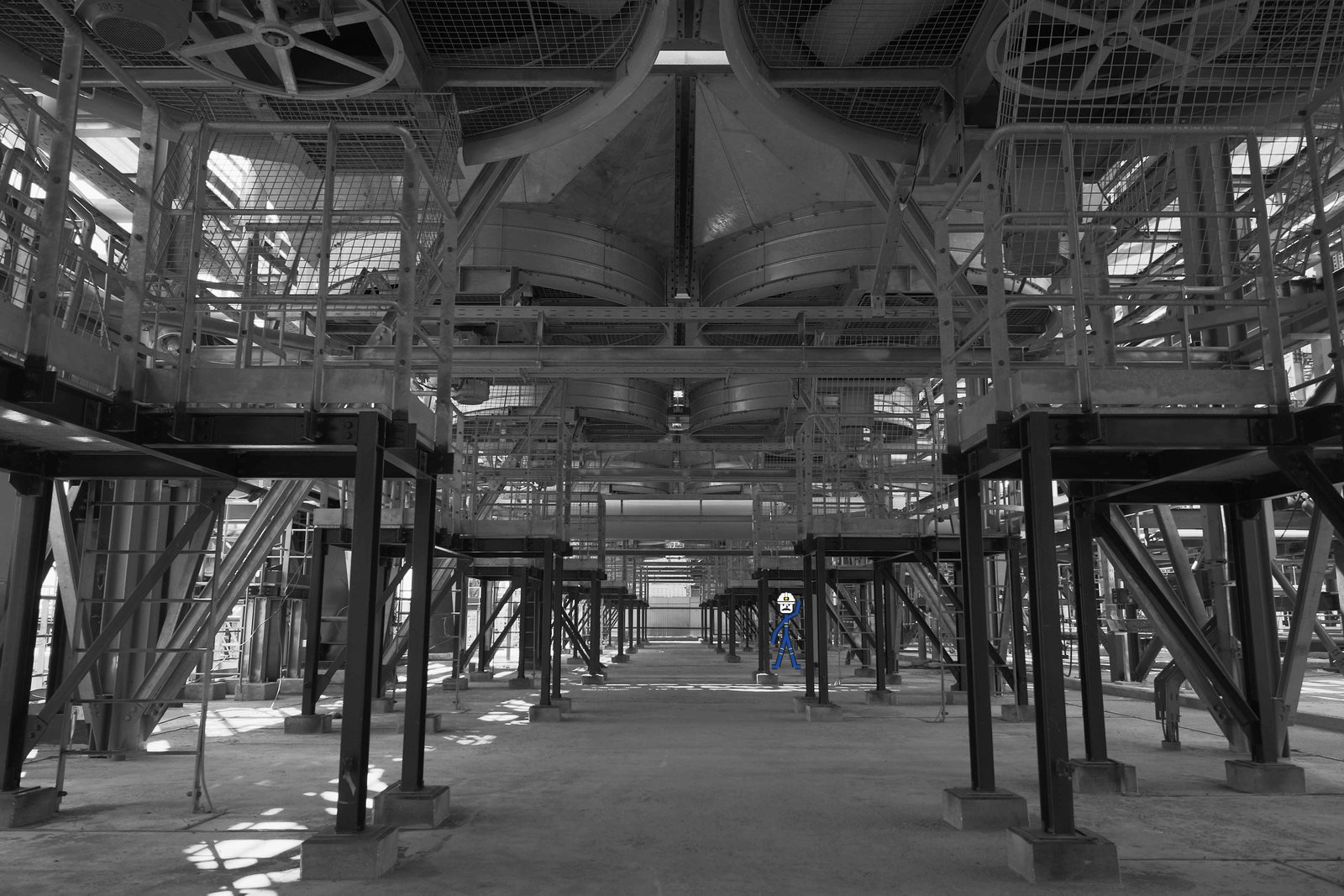
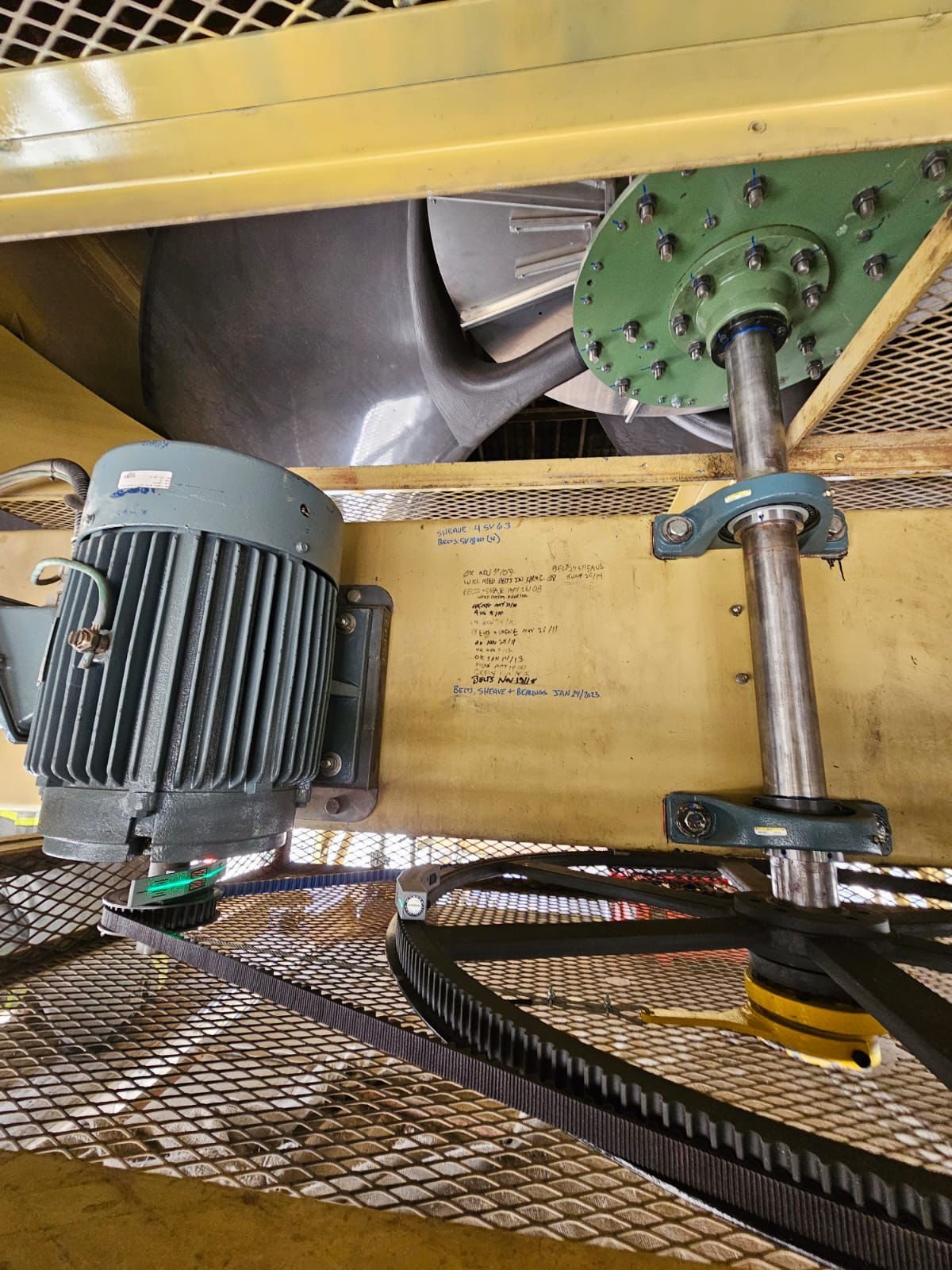
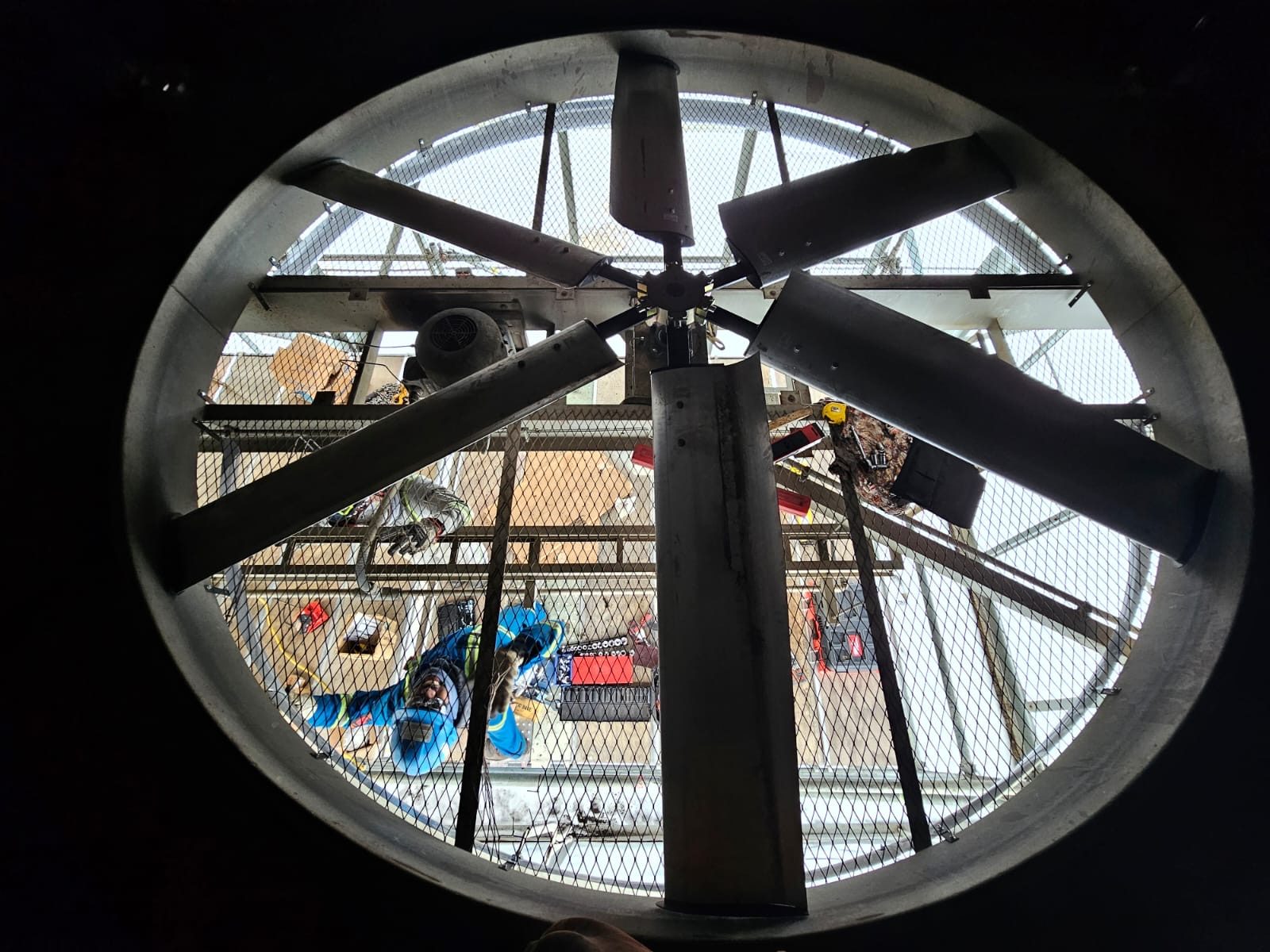
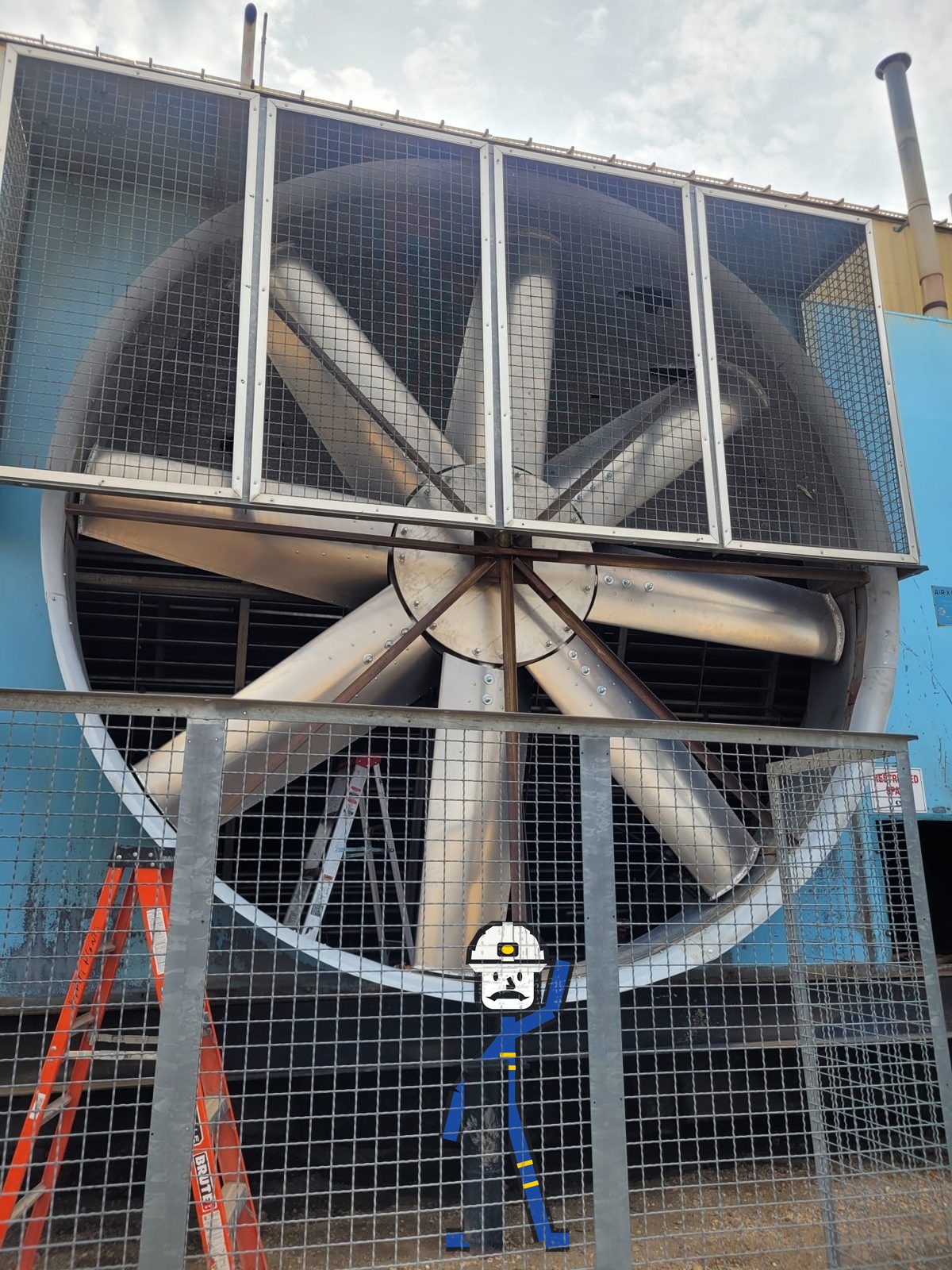
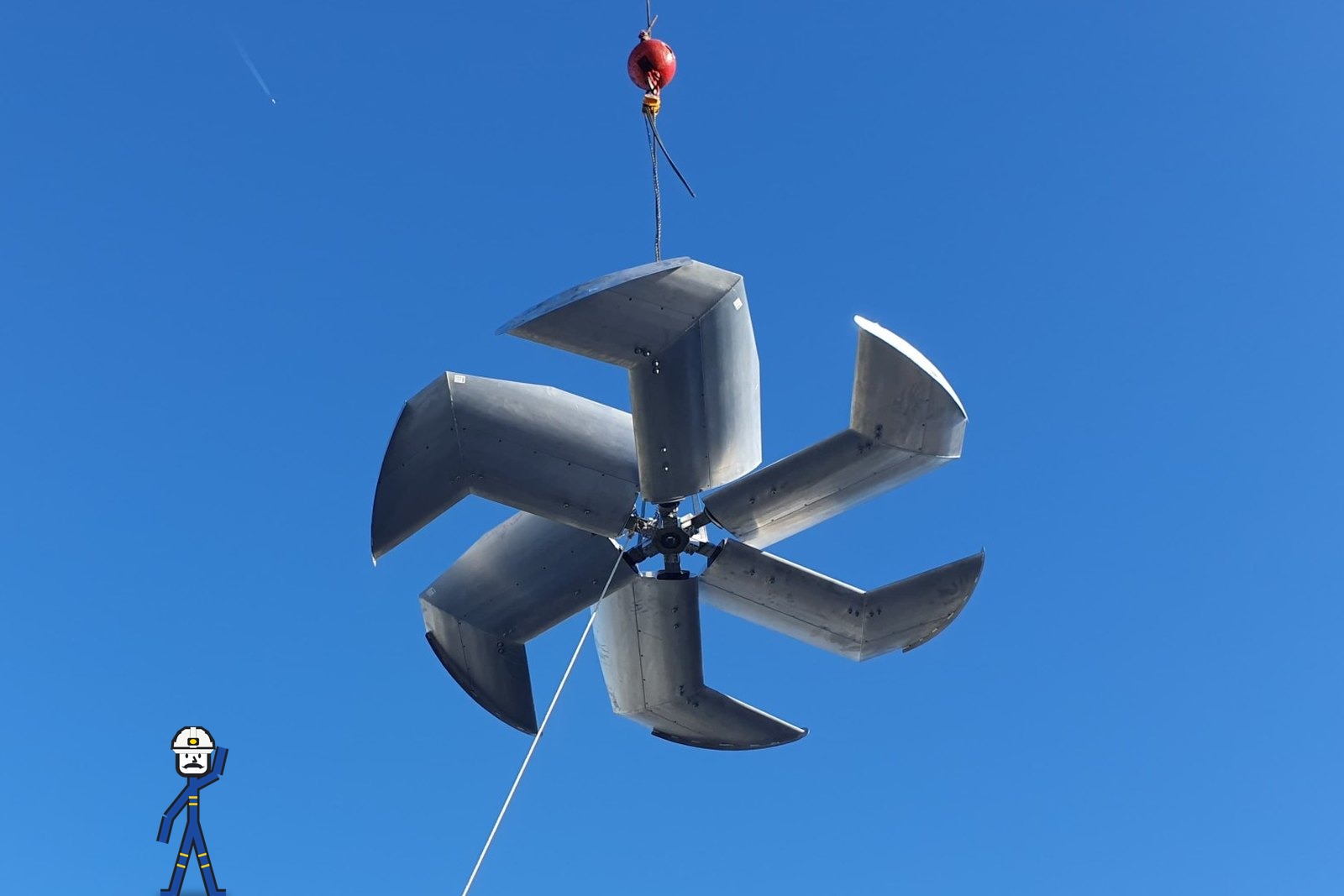
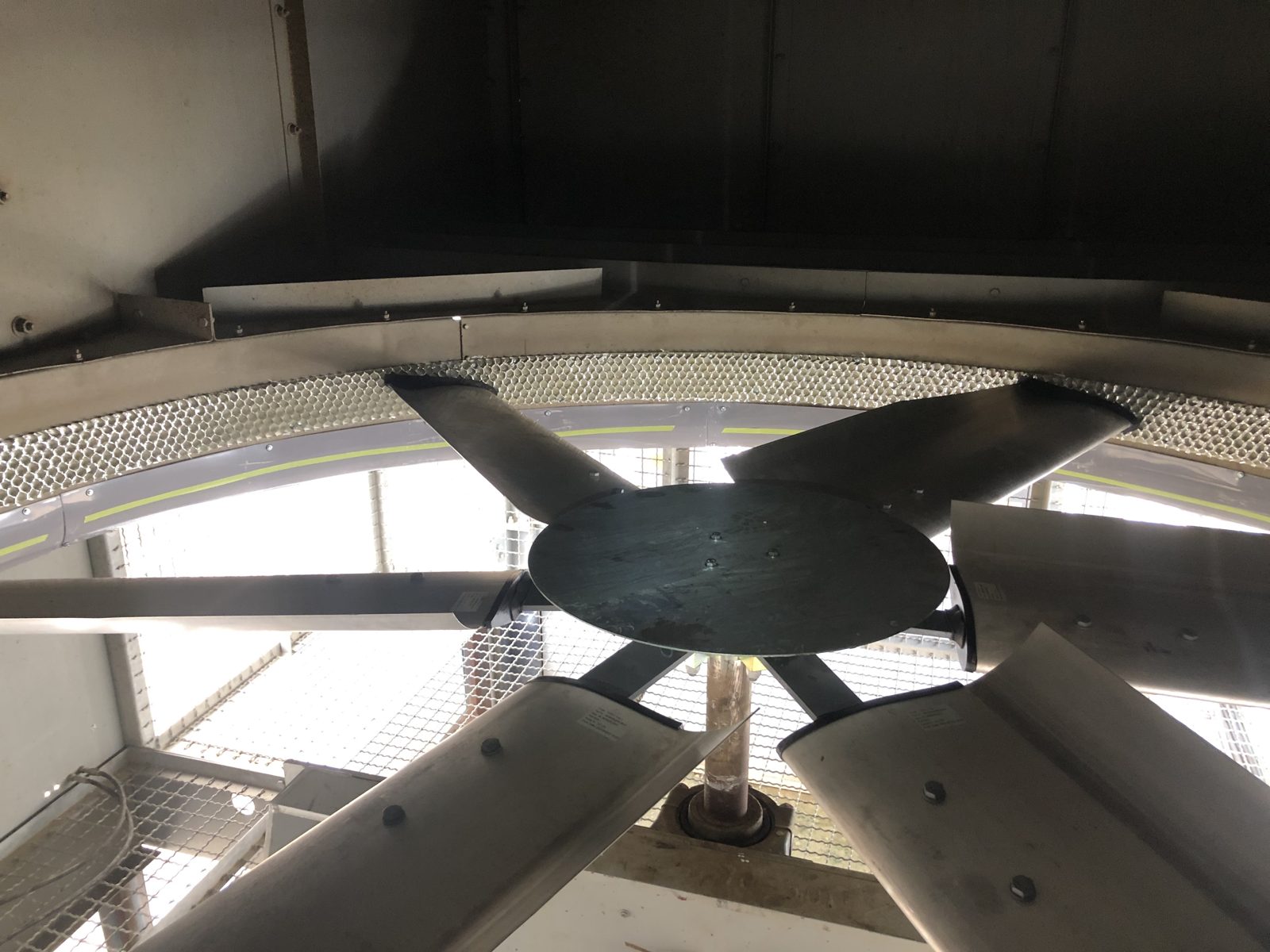
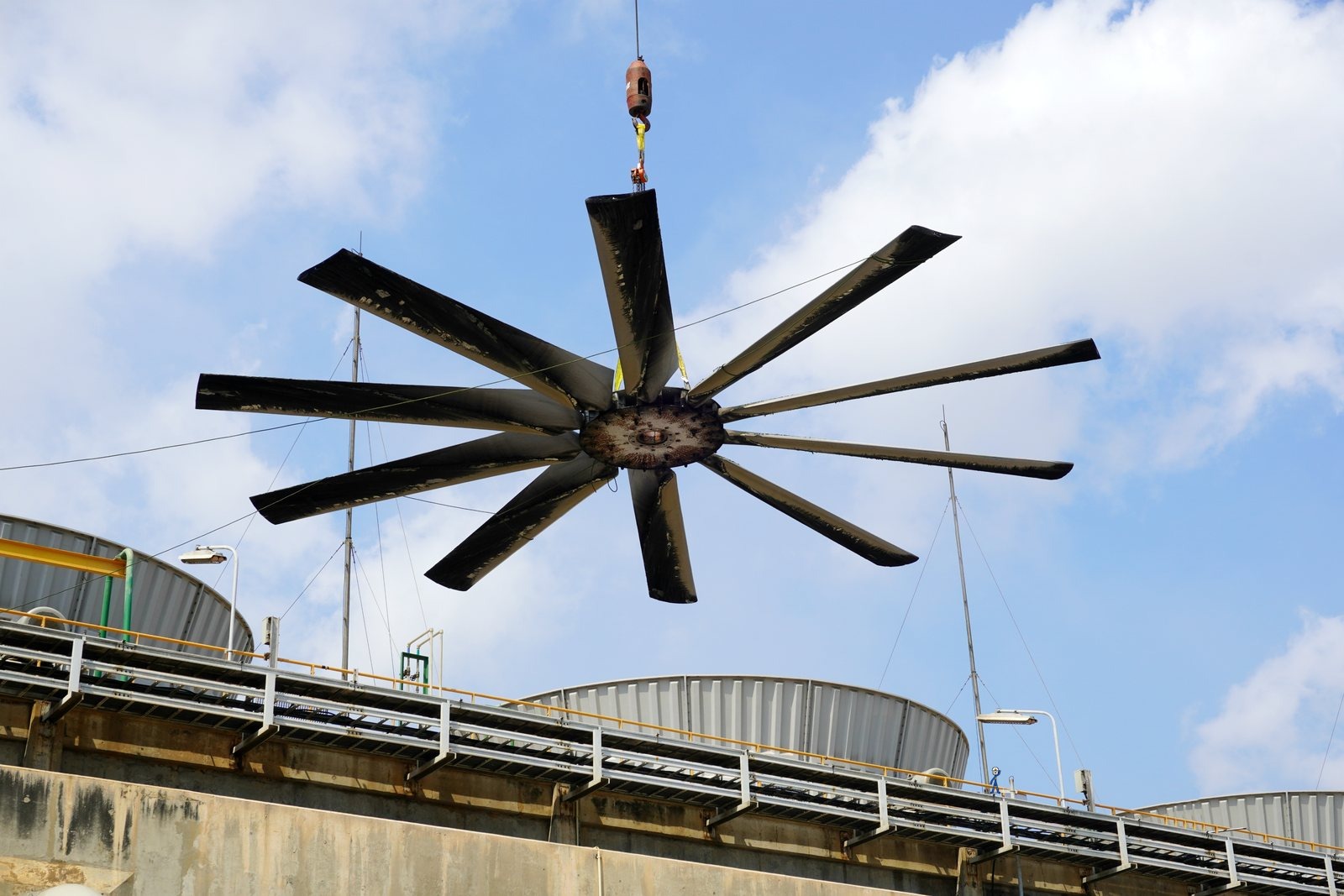
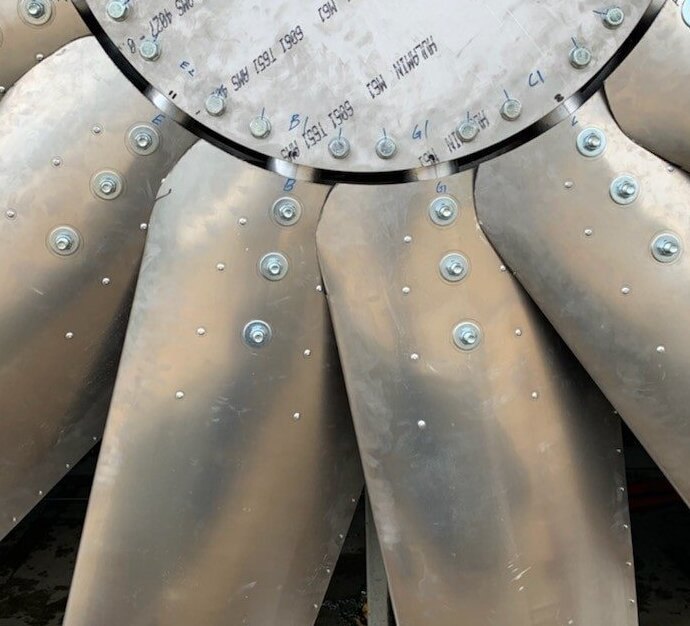
The big fans. 9 to 40 ft.
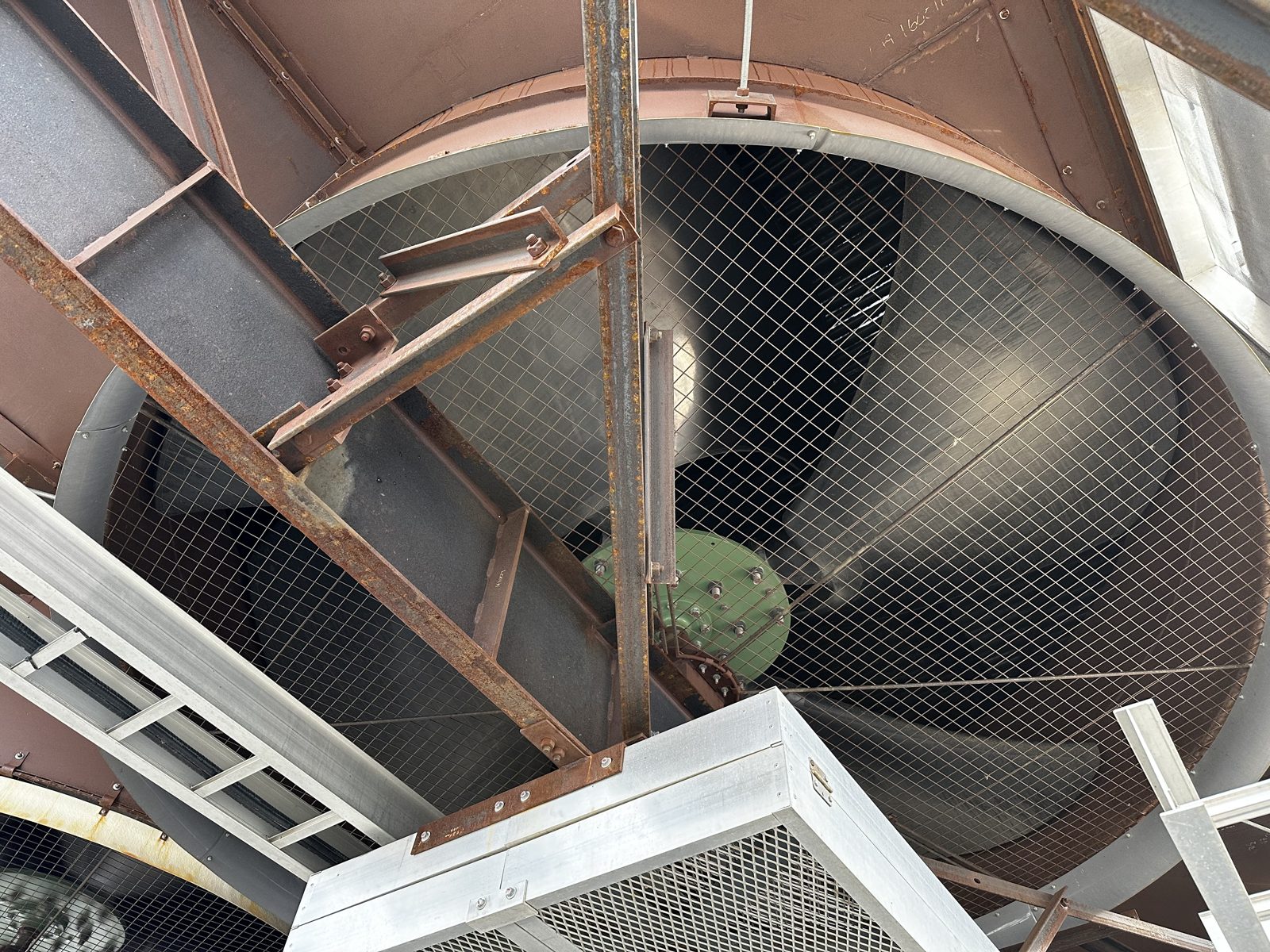
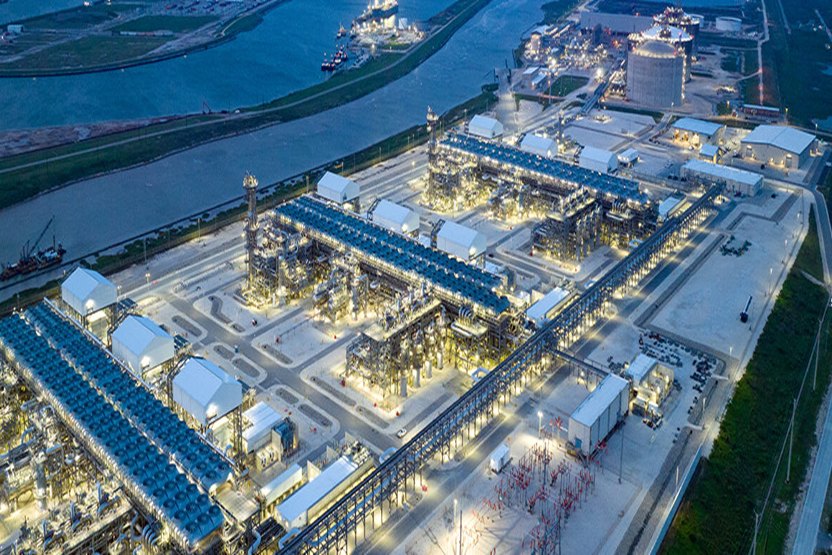
Air cooled heat exchangers, air cooled condensers and cooling towers on process sites. We supply the parts and the design that keep them running, and we make them bulletproof for operations.
Not agricultural, HVAC or household fans.
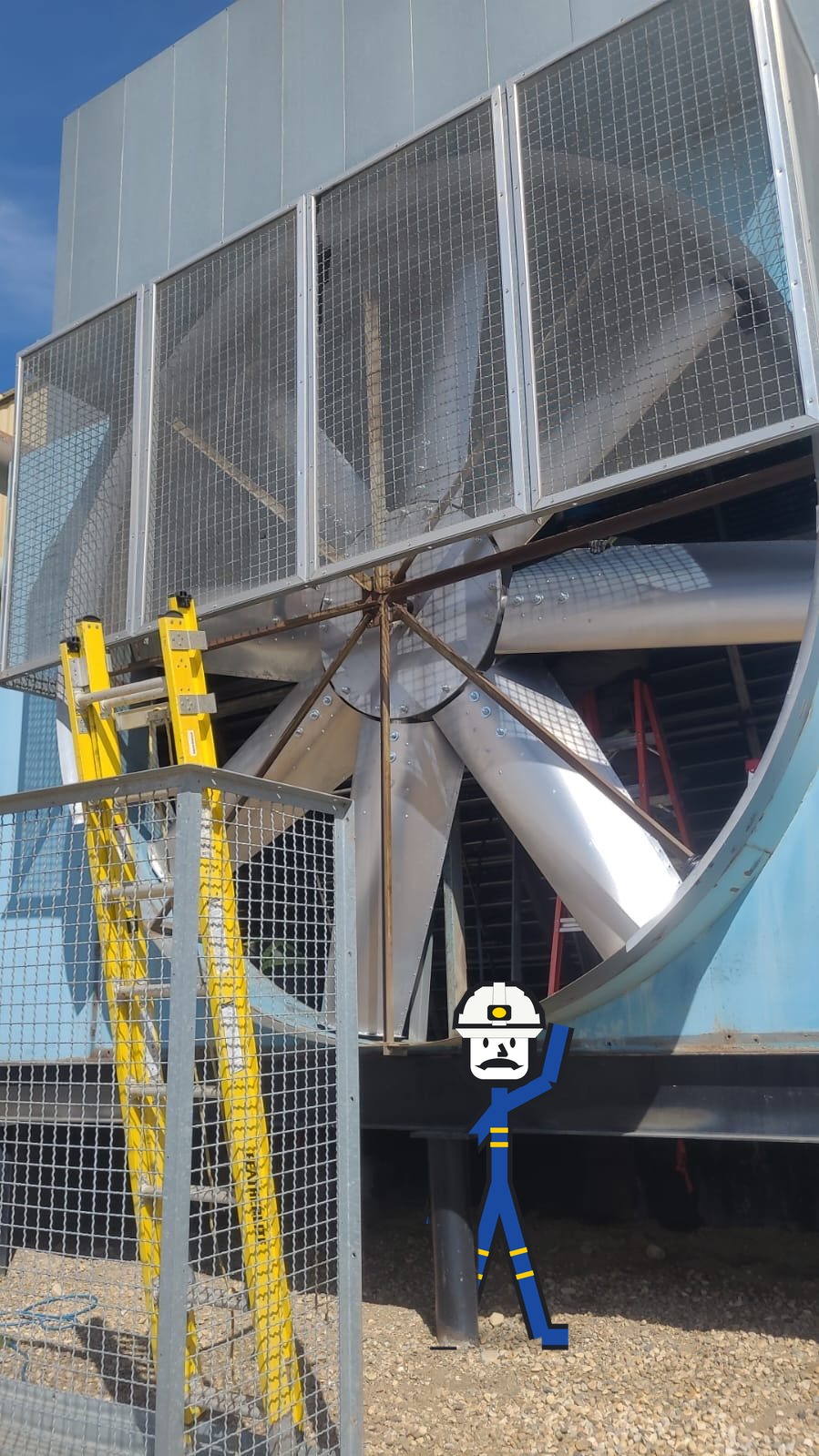
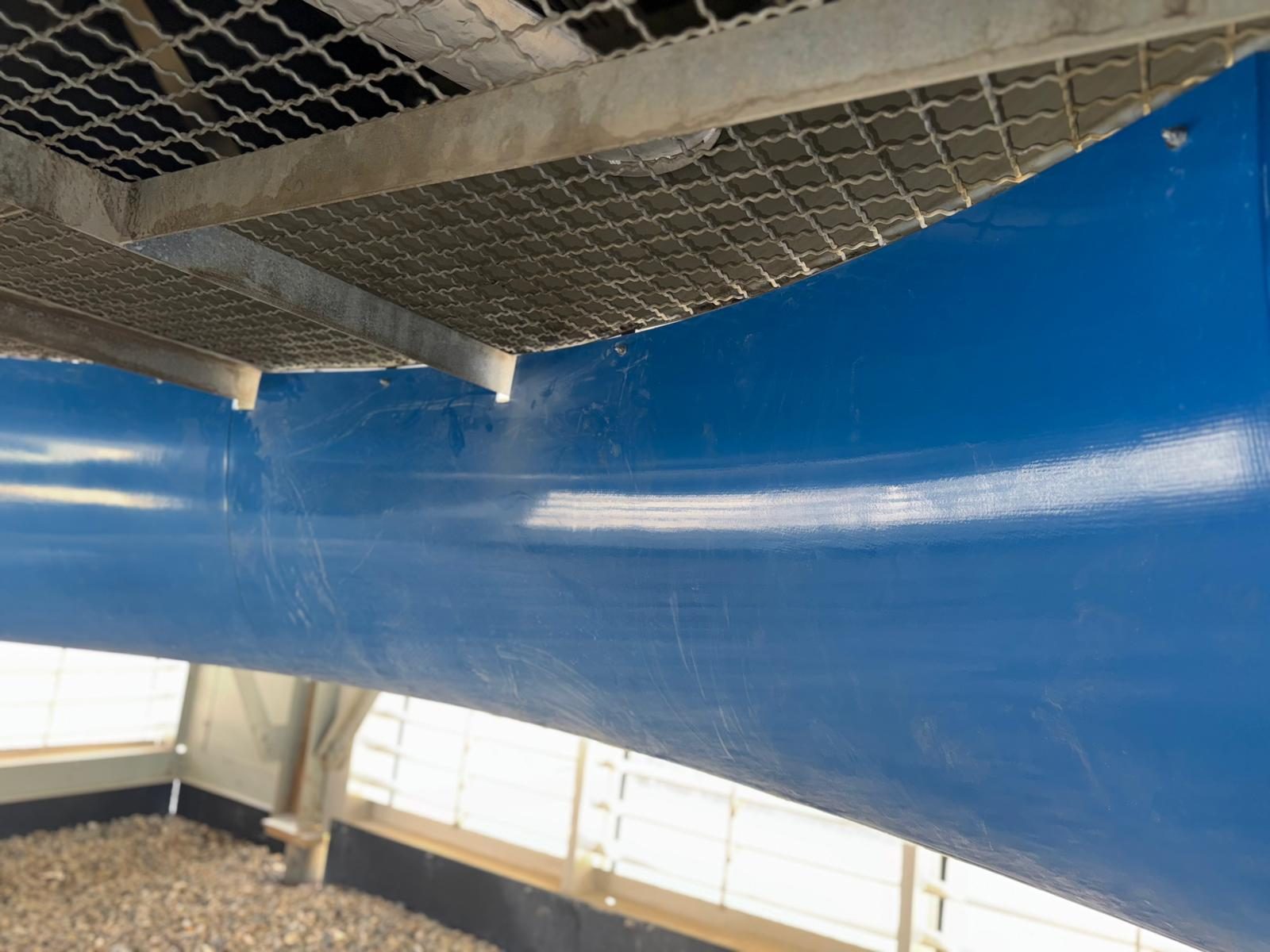
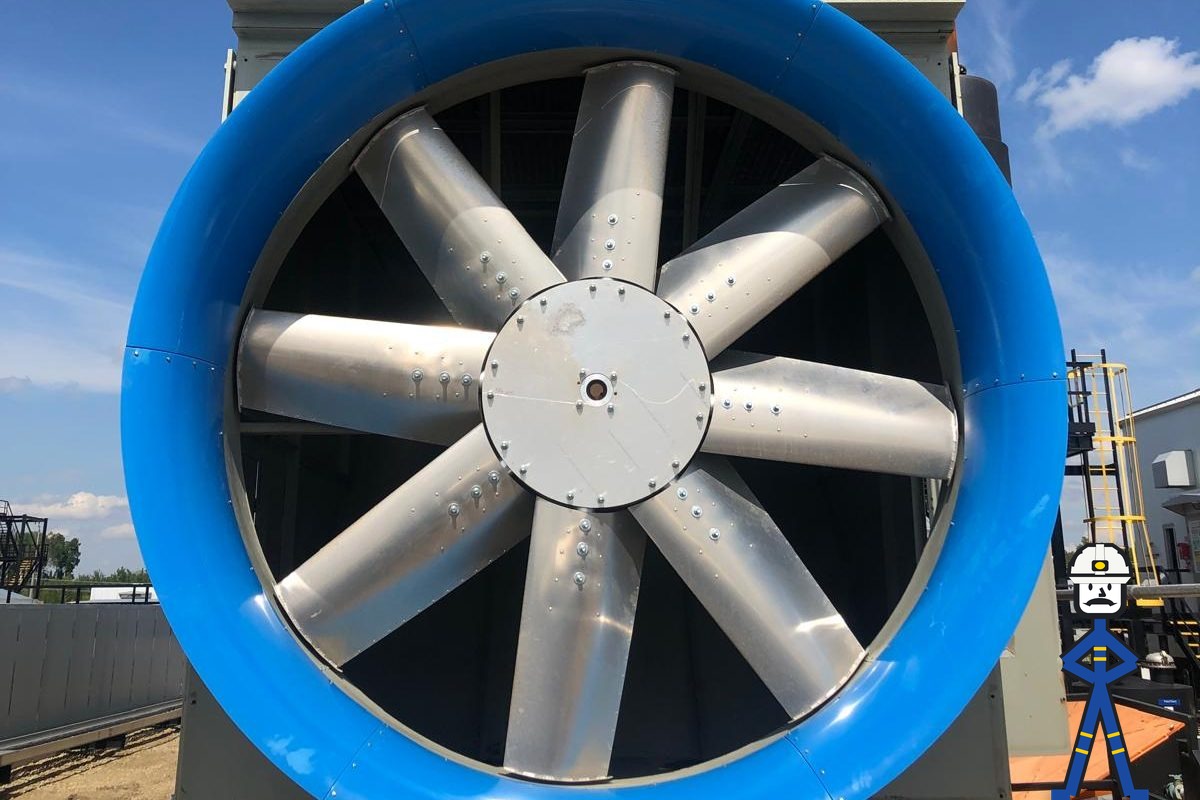
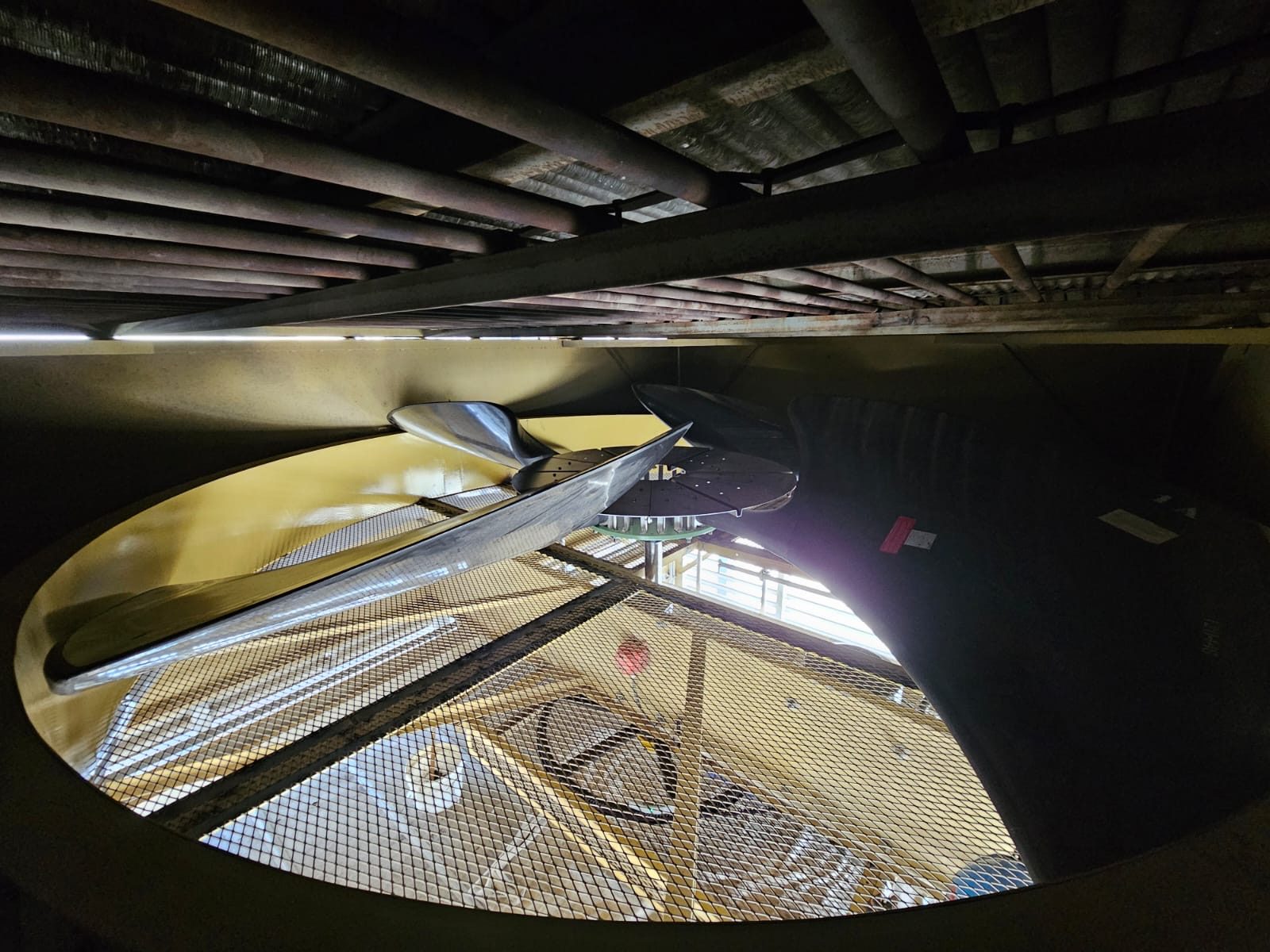
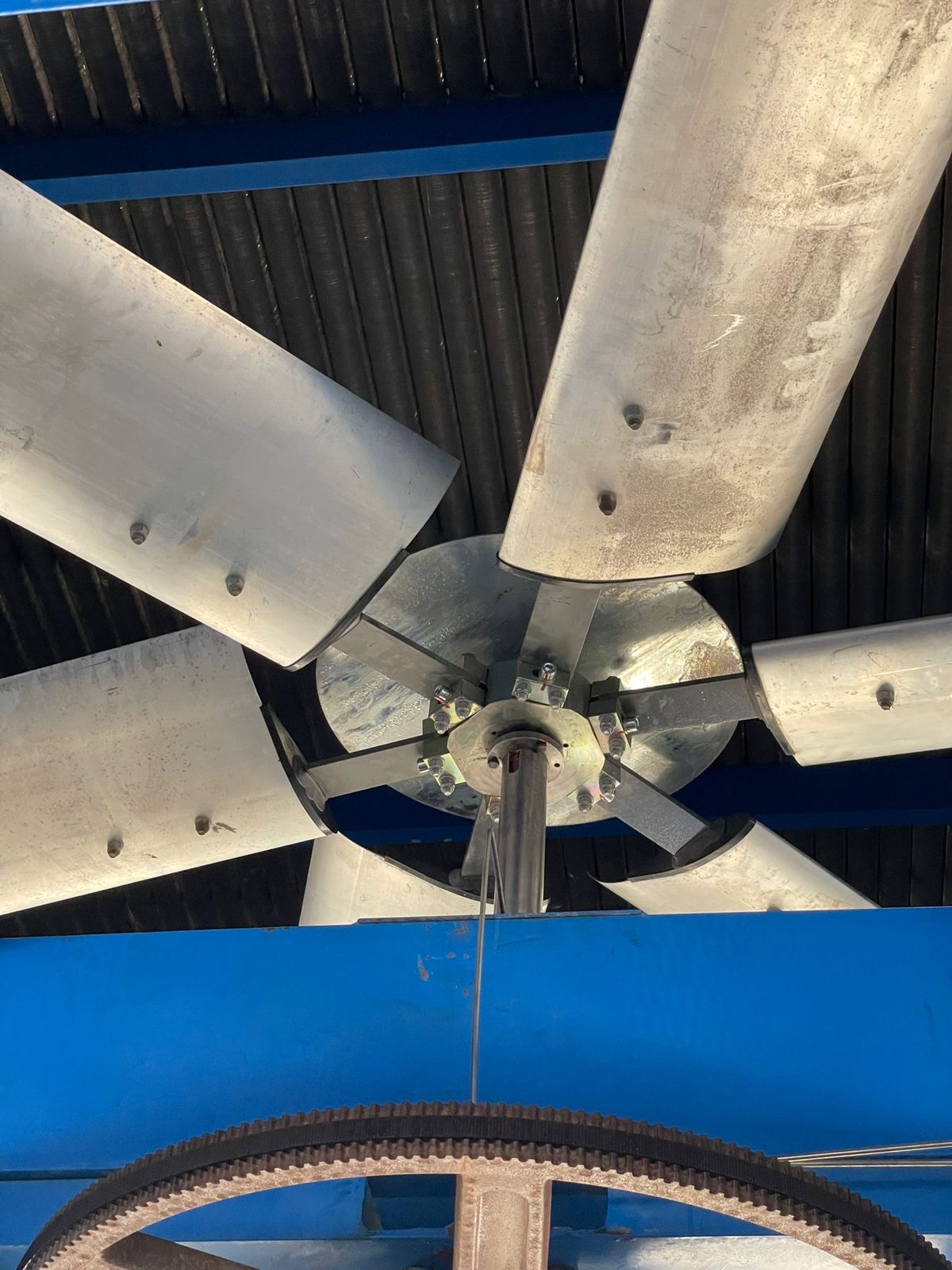
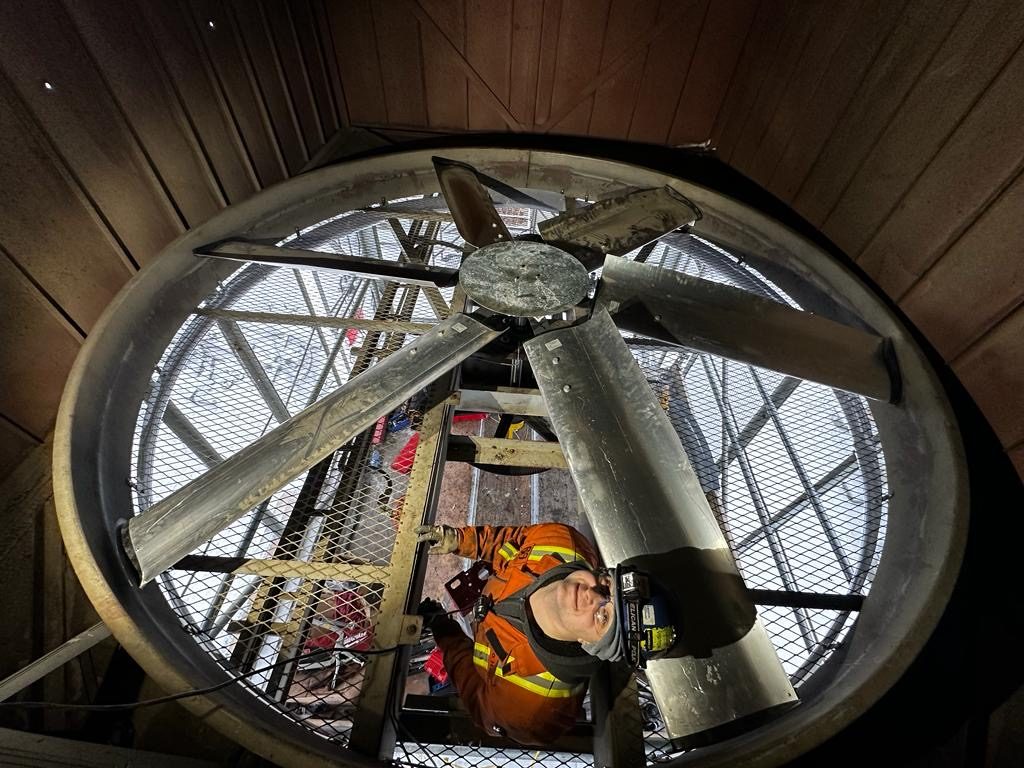
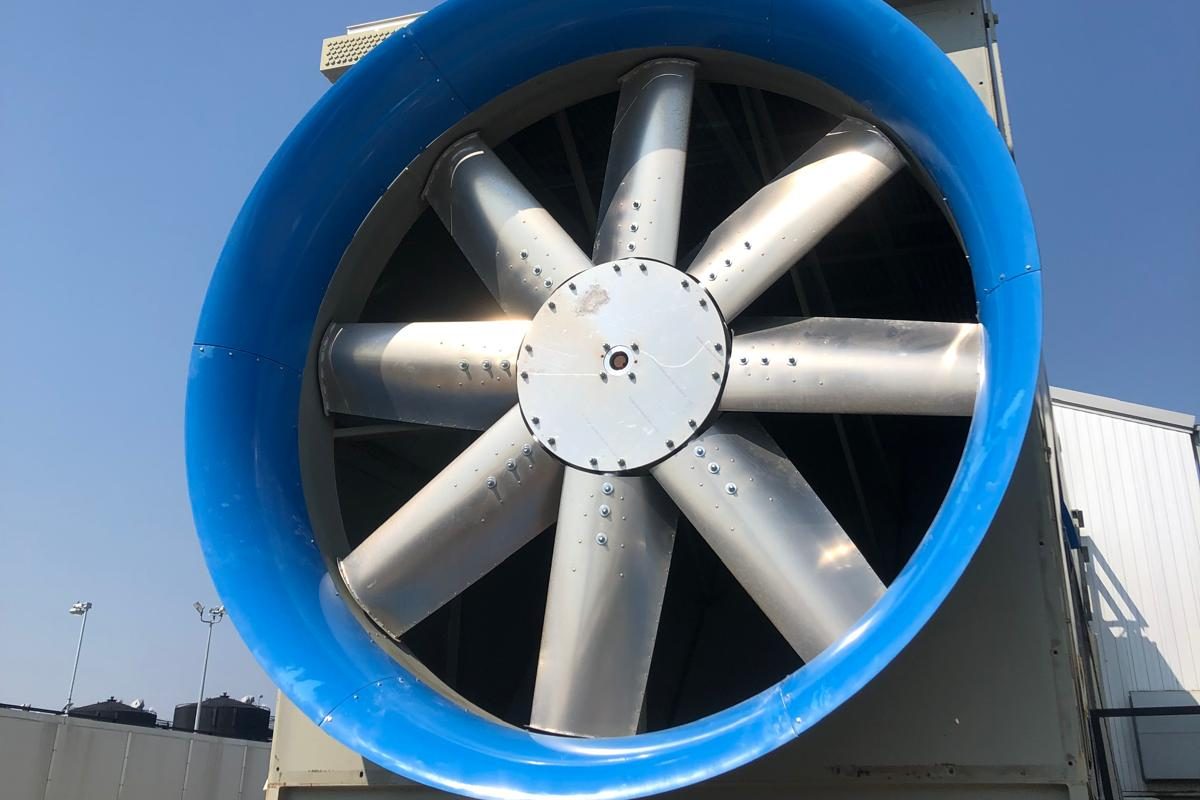
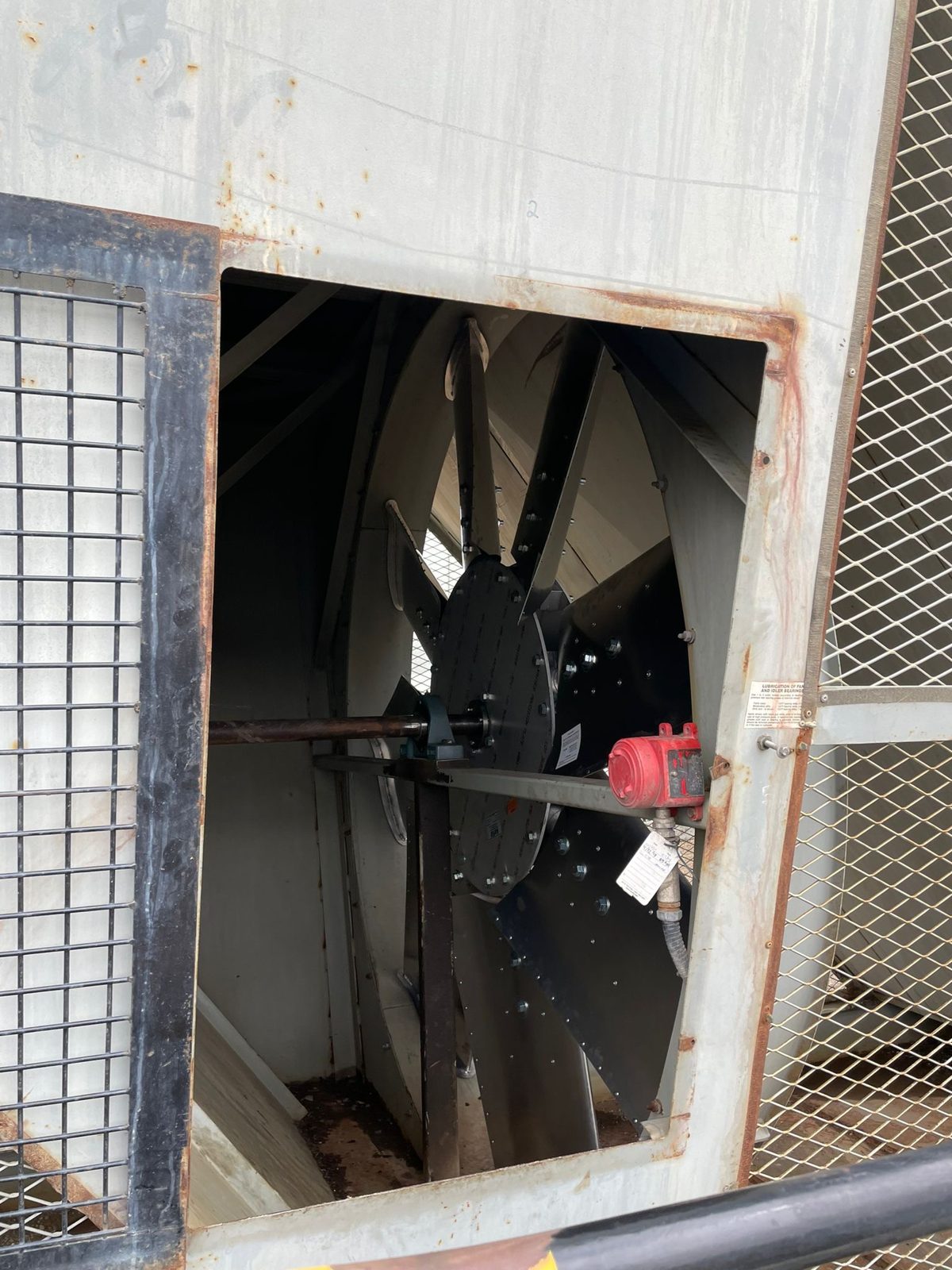
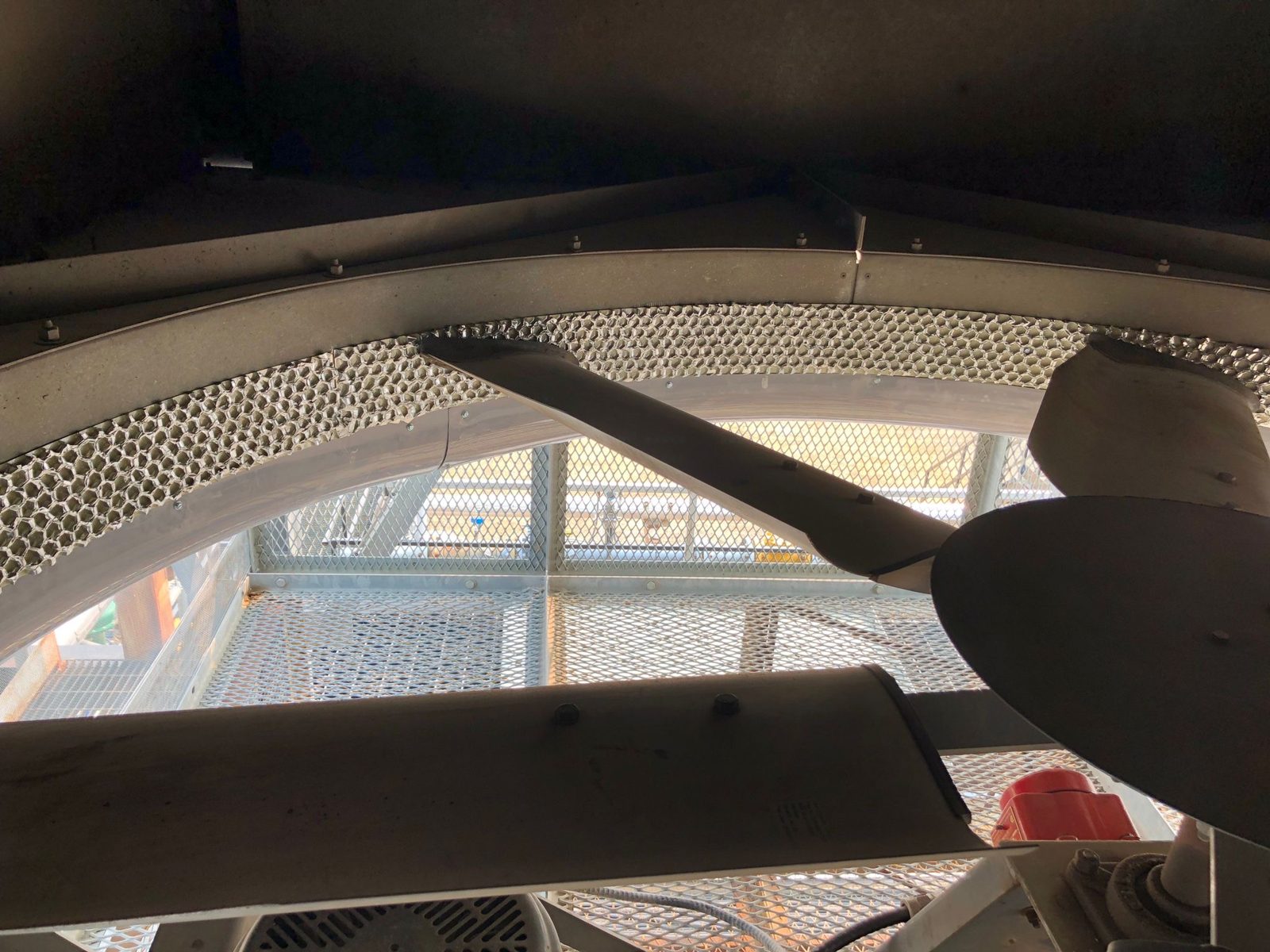
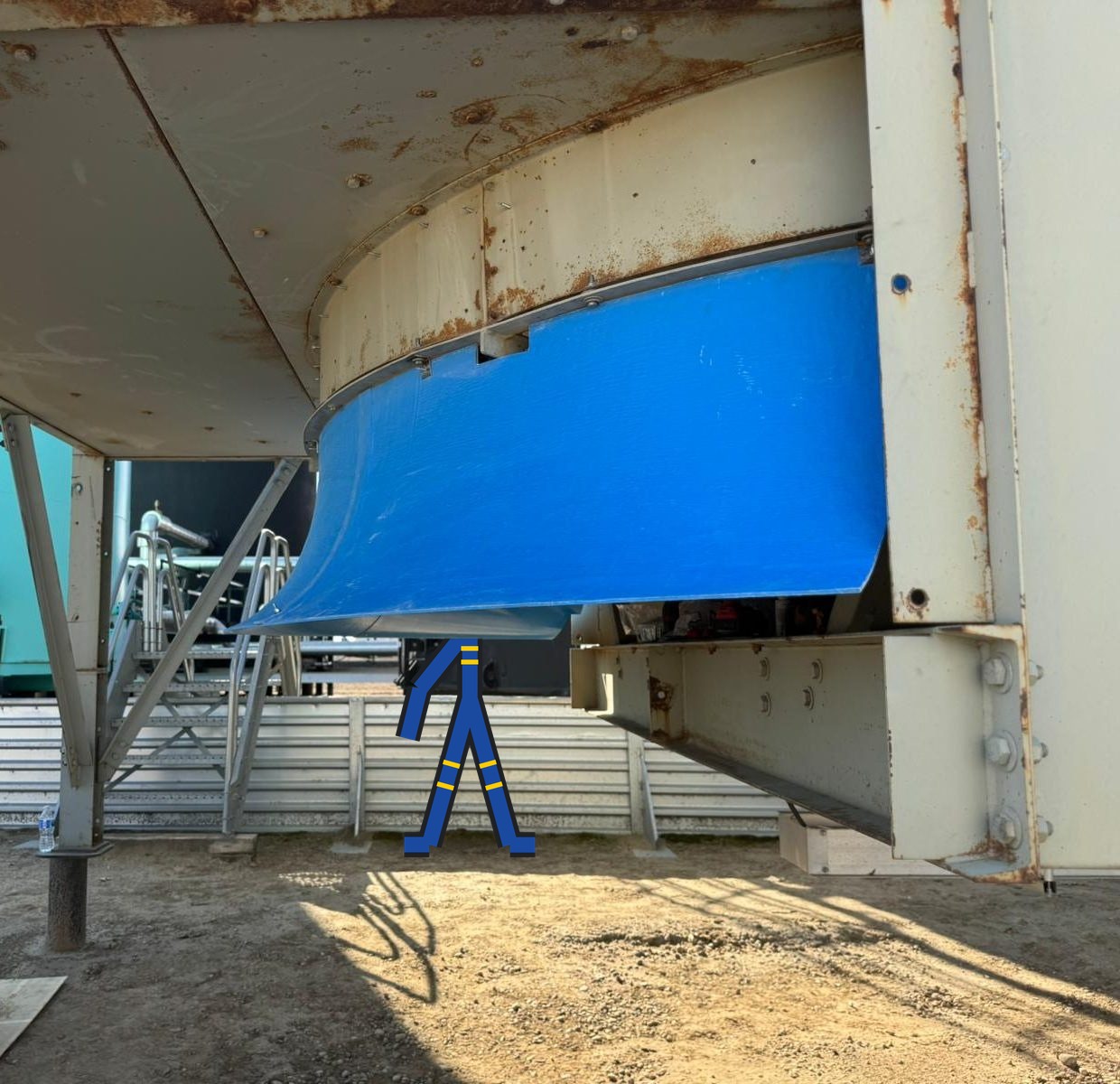
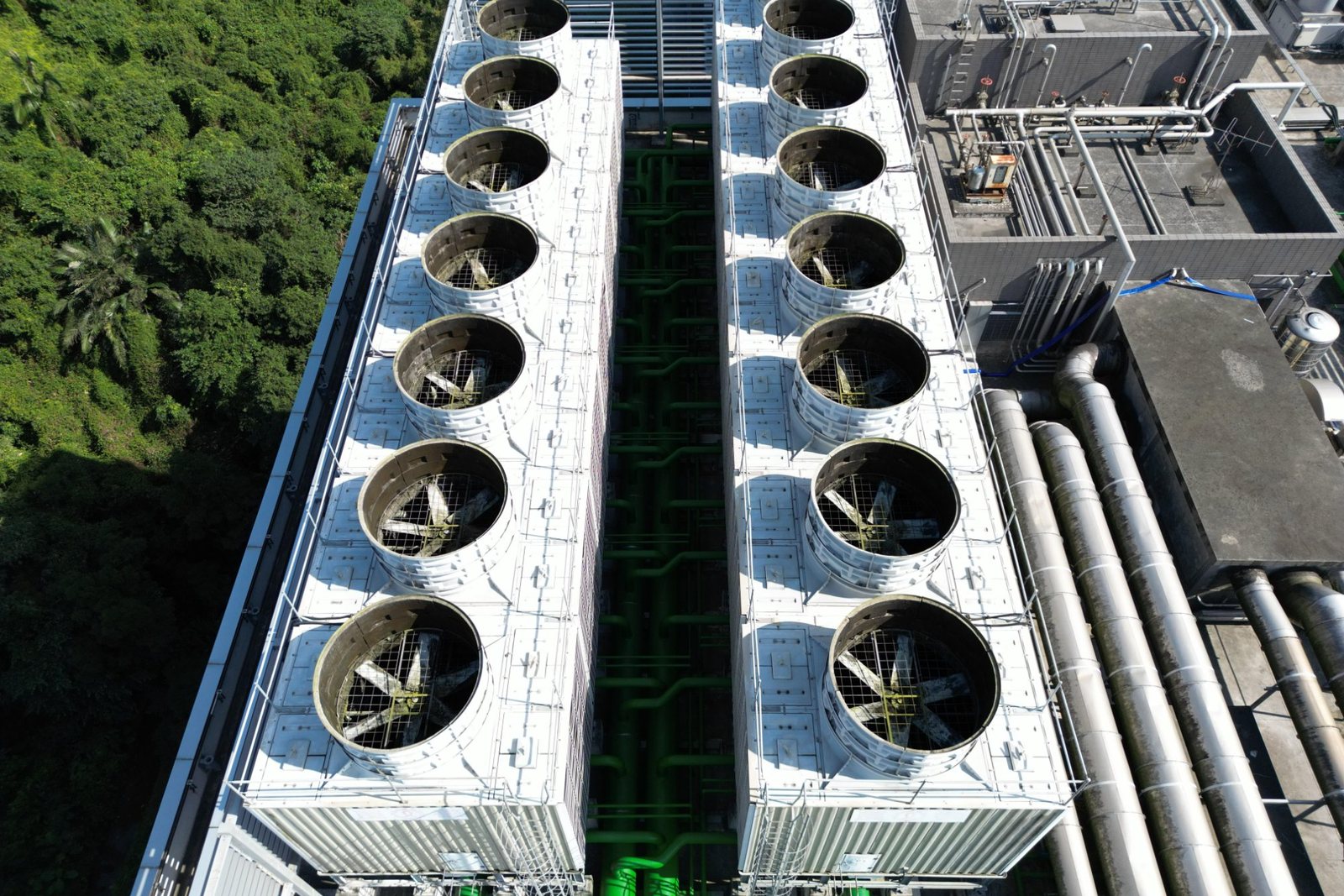
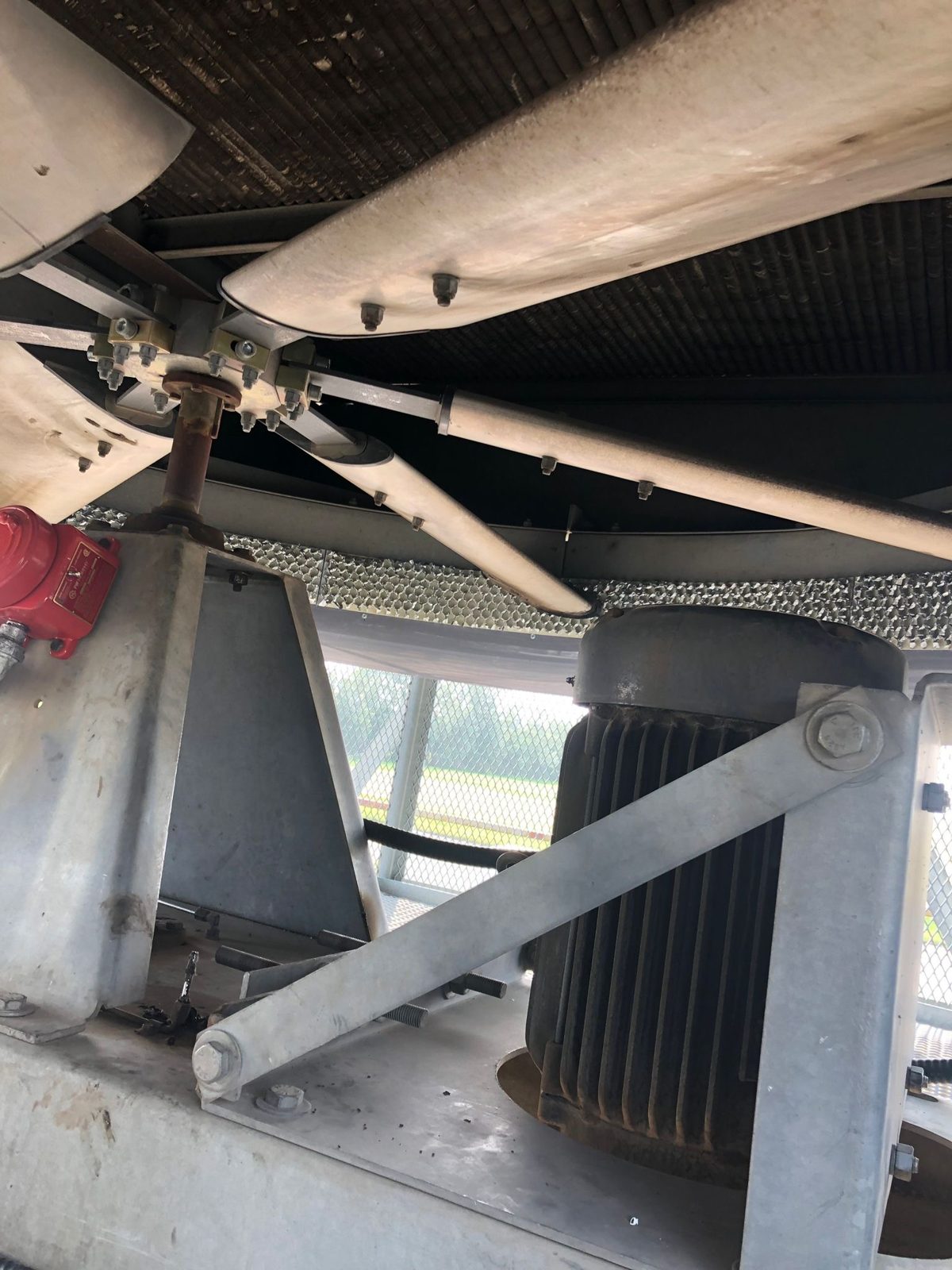
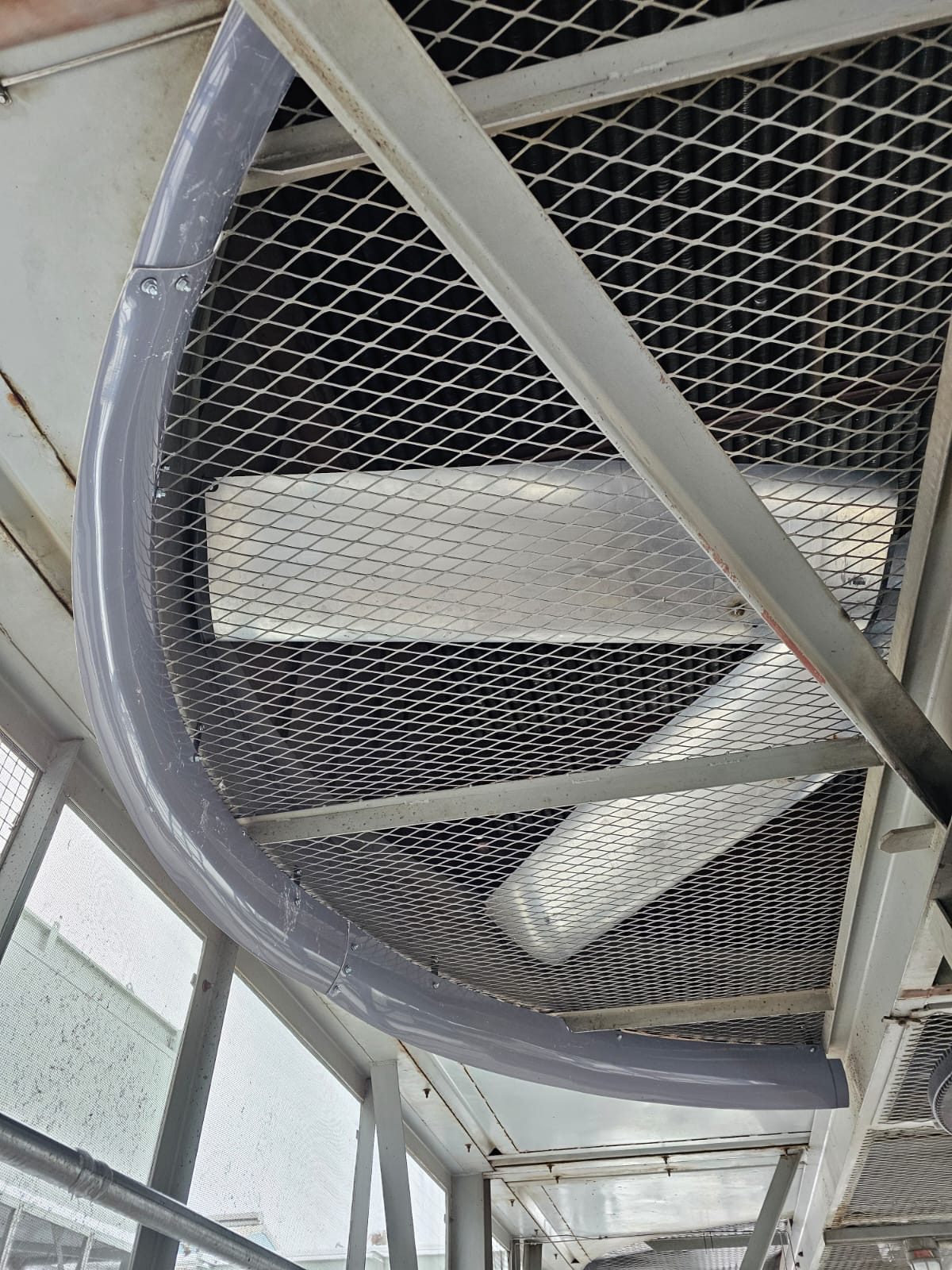
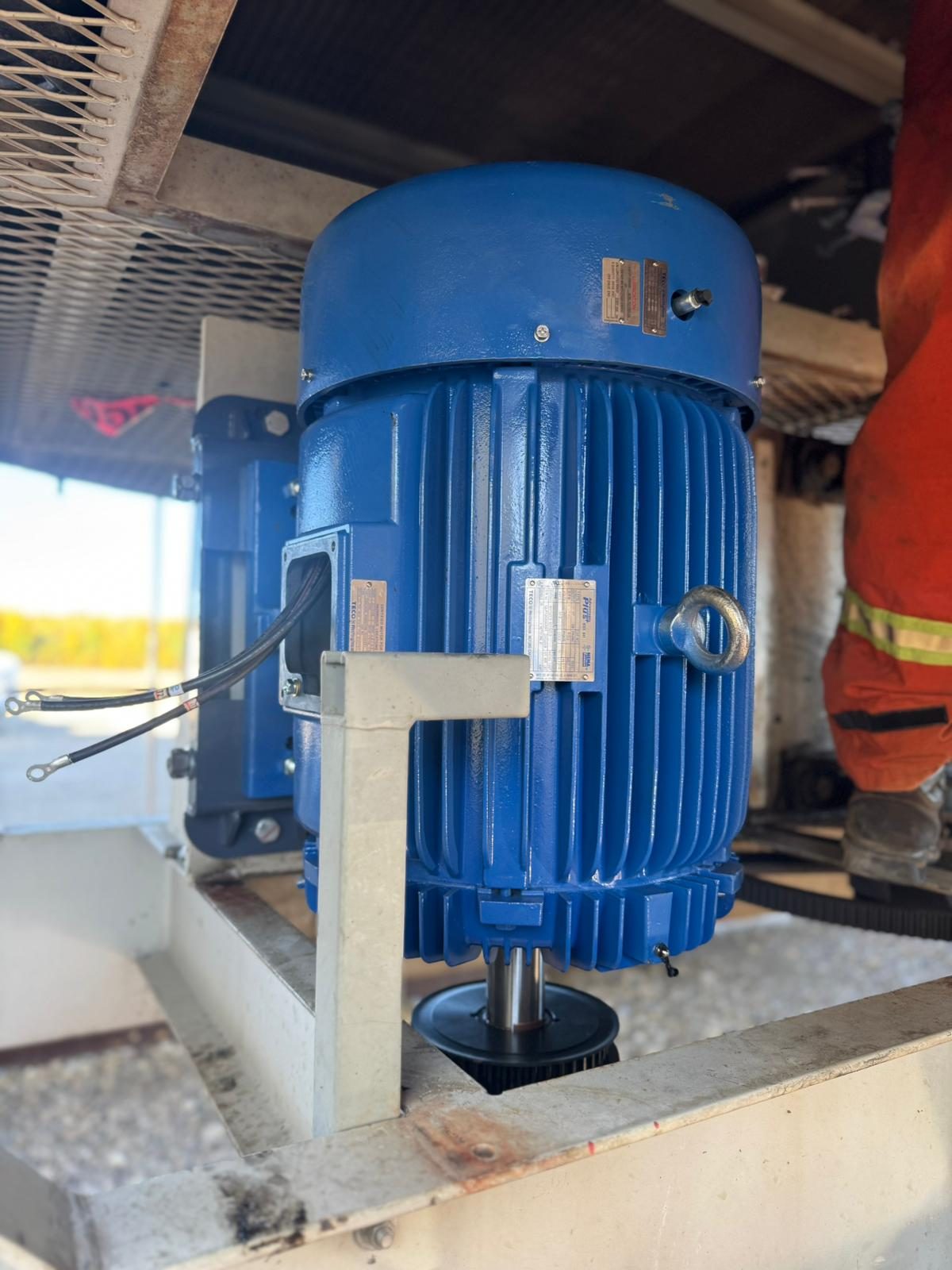
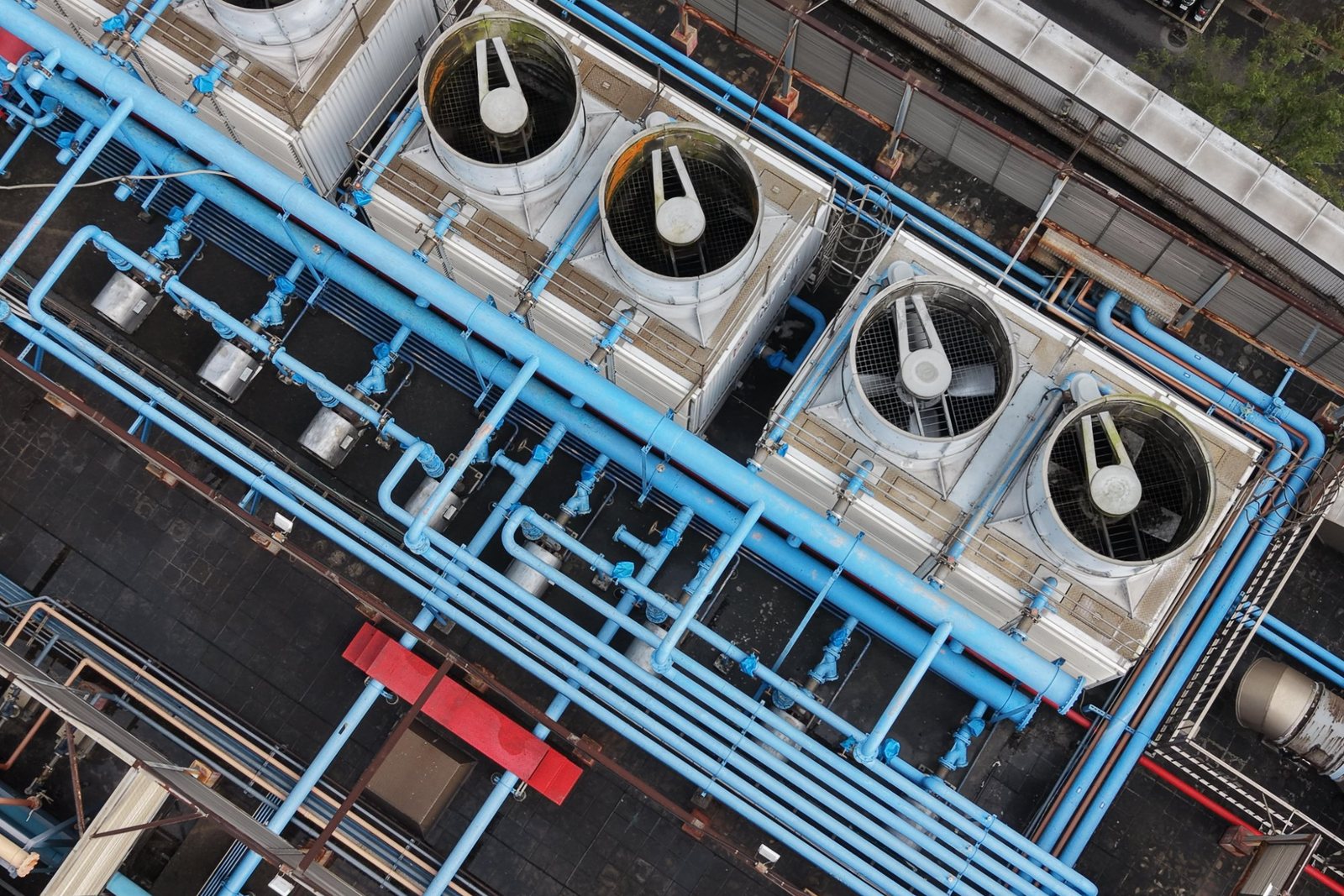
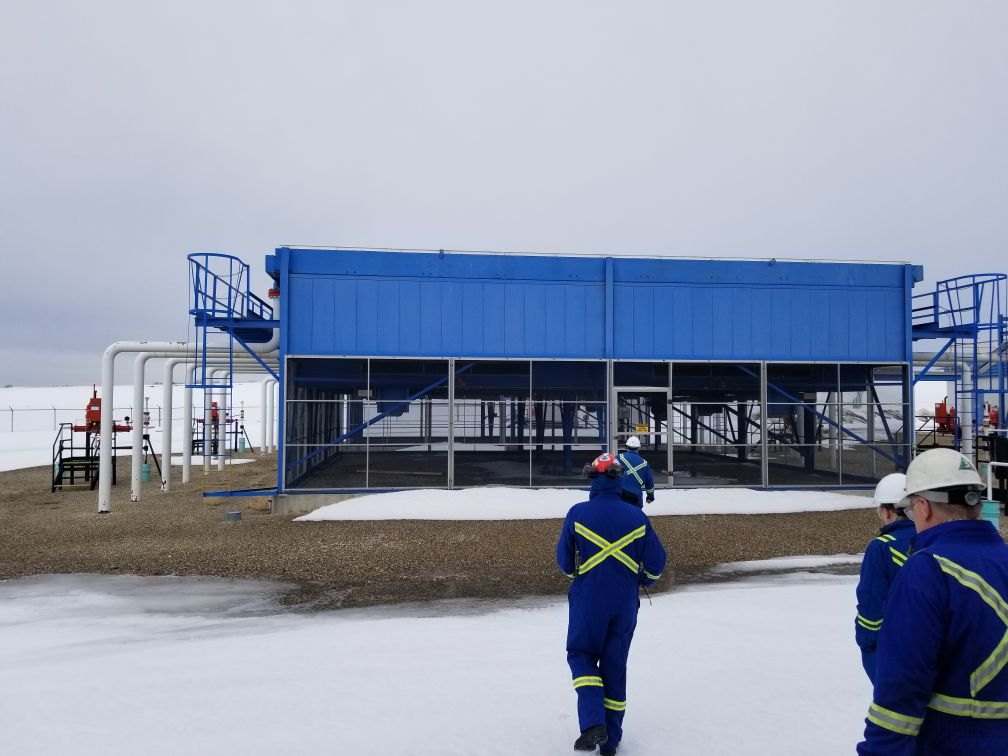
Industrial Axial Fans More
Cooling Towers & Evaporative Systems More
Parts, Distribution & Aftermarket More
05 / NOISE
Low Noise & Ultra Low Noise Fans
When a plant has neighbours or a noise limit, the fans are usually the loudest thing on site. Quieting them is specialized work, and we do it. More
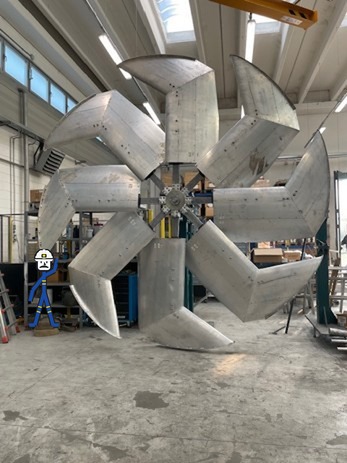
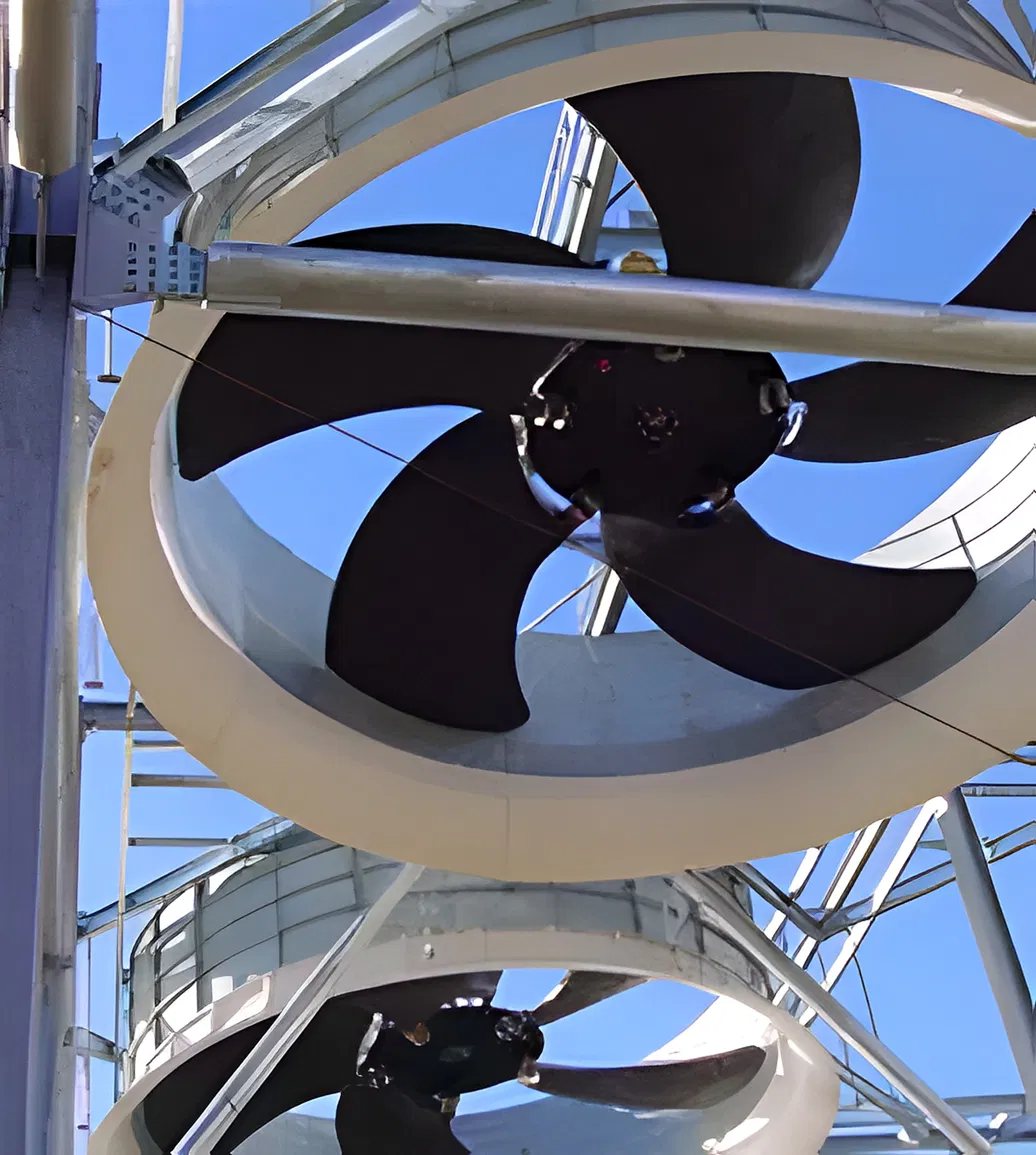
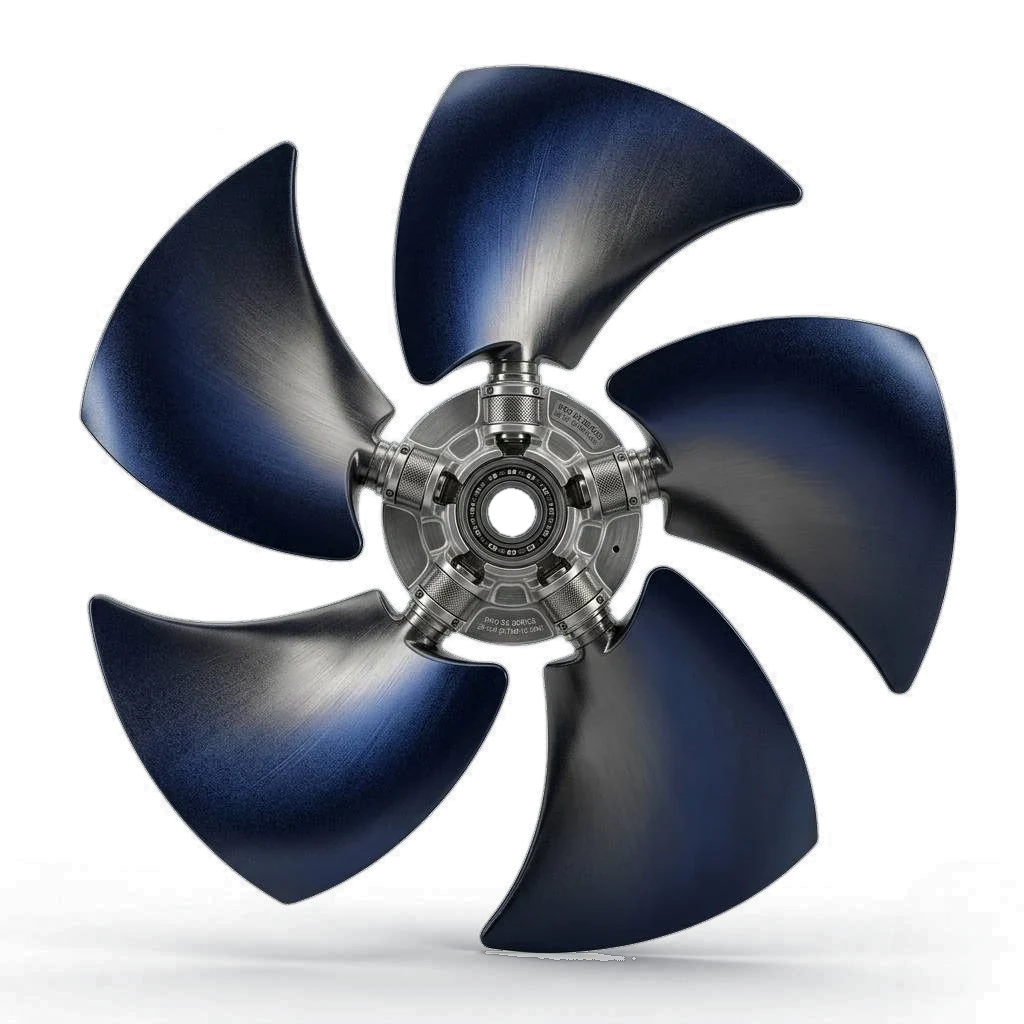
We don't take on new construction. Our work is air coolers, condensers and cooling towers already in service: optimizing them, and replacing what's worn.
Design & engineering
Parts backed by proven design. For ACHE optimization, upgrades and reliability, Fan-Div combines in house design with Russell De Jesus, P.Eng, who works the fan re-rate and the drive side. Fan-Div supplies all the parts required to bring those solutions to life.
E-Bell™ and DG-II®
The E-Bell™ and the DG-II®. Official distributor.
Exclusive Canadian distributor of the DG-II® Anti Rotation Device, global distributor of the E-Bell™. Nick Agius, our Founding Partner, designed and patented the DG-II® and created the E-Bell™.
E-Bell™ inlet bells
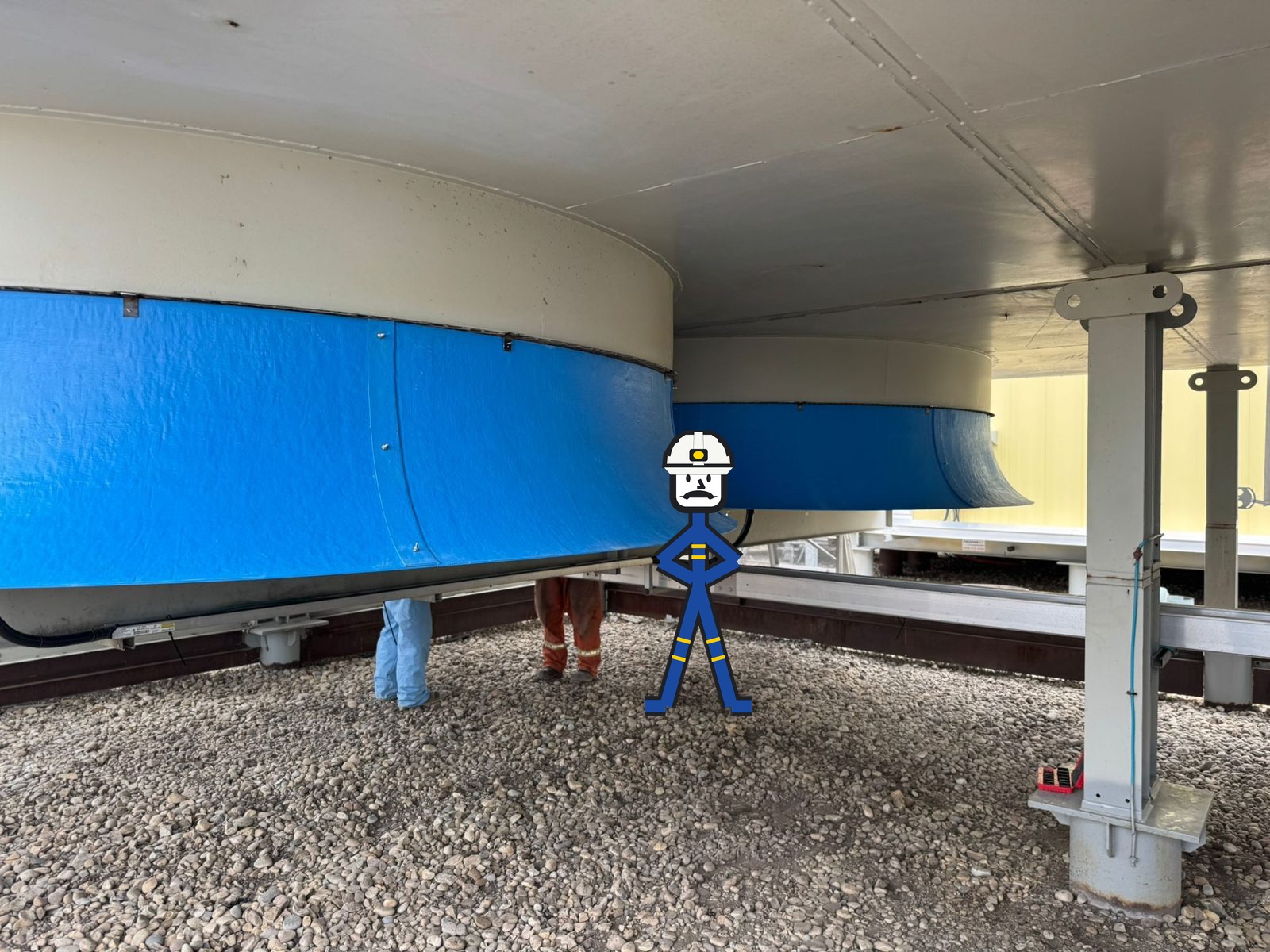
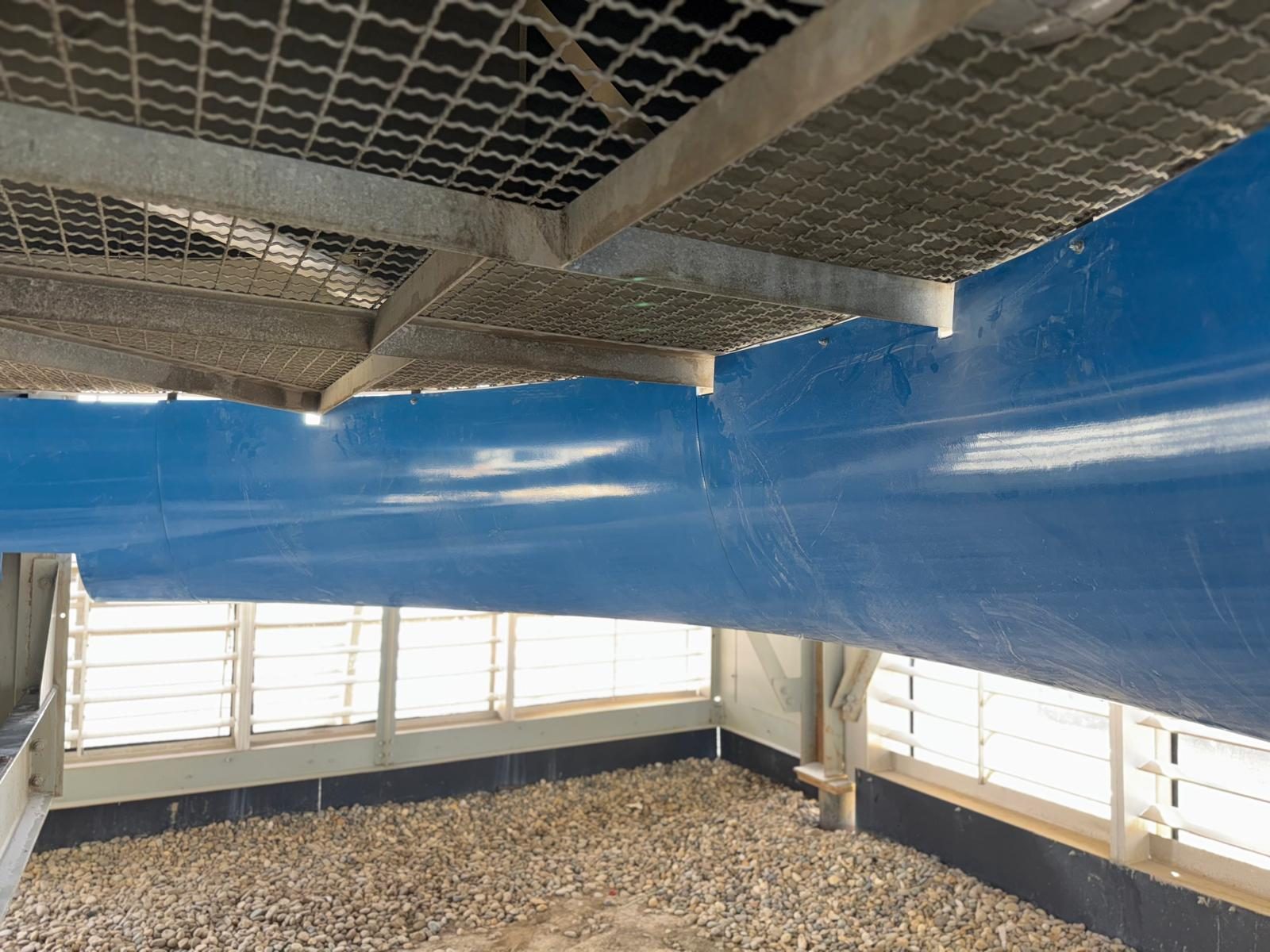
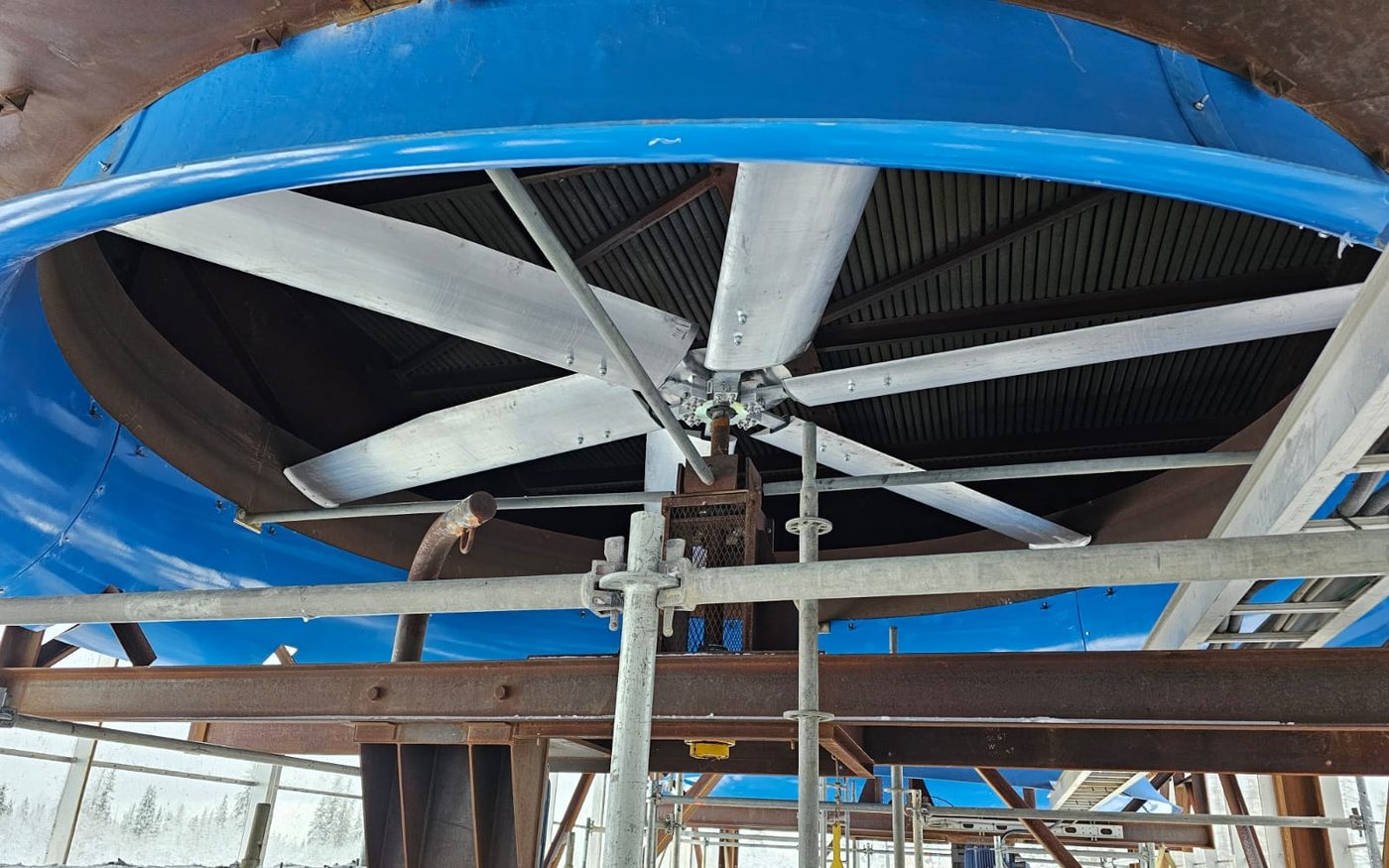
E-Bell™ inlet bells with high efficiency fans and parts, installed on a new cooler in Alberta. The deep bell does three things: it prevents vena contracta at the blade tips so the fan moves more air, it runs more quietly, and its deep profile can help reduce how much hot exhaust short cycles back into the inlet.
DG-II® Anti Rotation Device
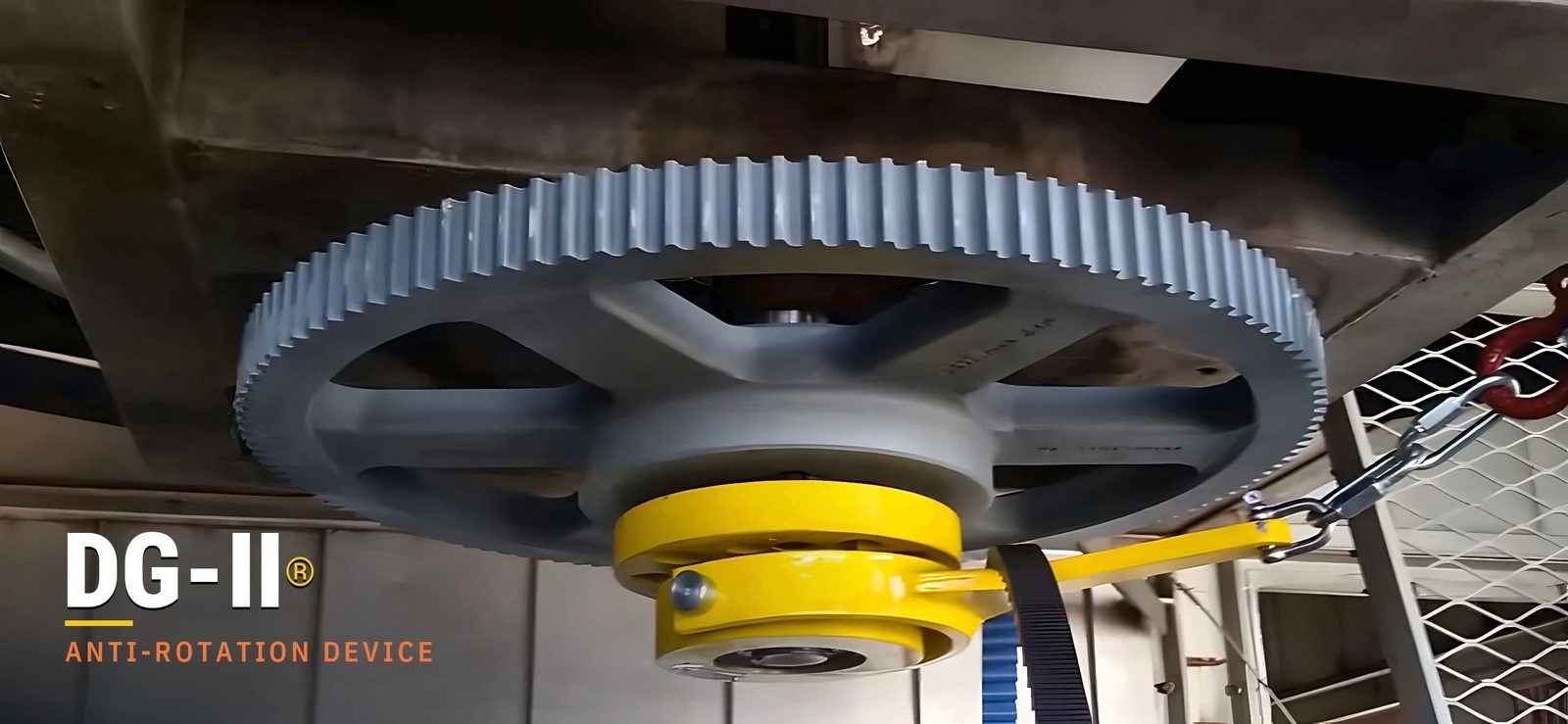
DG-II® Anti Rotation Device installed on a fan drive. When the motor stops, the fan can't spin backwards.
Why fans windmill backwards. Shut a fan off and the ones beside it keep pushing air through the cell, and that backdraft spins the stopped fan in reverse. Start the motor into a fan turning the wrong way and you get belt and gearbox shock, blown fuses, and a hazard for anyone working nearby. The clip shows what happens without one.
Common questions
Our air cooler isn't cooling like it used to. Where do we start?
Work the air side before the process side, because most of what we see is airflow rather than heat transfer.
Start with the obvious losses. Fouled finned tubes, louvers that are partly closed or seized, bug screens packed with debris, and anything parked under a forced draft unit blocking the inlet.
Then the fan. Blade pitch drifting off spec, worn or slipping belts, missing or damaged tip seals letting air spill back around the blade tips, and fans that were running backwards when the motor started. Thinking of speeding a fan up for more air? Power rises with the cube of speed, so run the fan laws first.
Then recirculation. If the air temperature at the fan inlet reads well above ambient, hot air is finding its way back around. It shows up most on forced draft units with low exit velocity on a still day.
Then the process side. Fouling inside the tubes, or a duty that has simply grown past what the unit was sized for years ago.
Our fan blades or hubs are old or obsolete. What now?
Older fan assemblies should be evaluated based on their condition and design, not just whether replacement parts are still available. Aging cast aluminum blades and hubs, worn or hardened bushings, obsolete attachment systems, corrosion and fatigue can all increase the risk of a fan failure.
A fan failure can cause significant equipment damage and create a serious safety hazard. Simply replacing a damaged blade or component may not address the underlying issue with an aging or obsolete fan design.
Send us the existing fan BOM, spec sheet or photos and we can review and determine whether it makes sense to repair it or upgrade to a modern fan assembly. A replacement fan can also be properly selected and pitched for the actual operating requirements rather than simply matching the existing setup.
Why do air cooler fans windmill backwards?
Shut one fan off and the fans beside it keep pushing air through the cell. That backdraft spins the stopped fan in reverse.
Starting a motor into a fan that's already turning the wrong way causes belt and gearbox shock, blown fuses, and a hazard for anyone working nearby. Watch the animation.
How do you make a fan low noise?
Mostly by slowing the blade tips down. Tip speed drives most fan noise, so low noise fans use wide chord blades, with more blade area, that move the same air at a lower speed. Then you add an inlet bell for clean air at the tip, tight tip clearance, and a drive set up for the lower speed. Wider blades are heavier, so we check the hub, drive and structure before swapping them in. More on low noise fans.
Technical reading
Start with the optimization paper.
Nick Agius has published widely on Air Cooled Heat Exchangers and axial fans.
- Optimizing ACHEs Hydrocarbon Processing, 2023 (PDF). The one to read first.
- Why fans windmill backwards Short video, on this page
- How air coolers, fans and towers work Our technical page
- All technical papers thefanguy.ca
Industry links
The people we work alongside.
Specialists and trusted installers.
 OpenCycle Technologies Noise studies and emissions consulting
 Octo Mechanical Air-cooler installation and maintenance, start-ups and commissioning
 Syndicated Industries Pumps and rotating equipment, Grande Prairie
 Westpower Rotating equipment service, vibration analysis and lubrication
 TheFanGuy.ca Nick Agius: fan optimization, low noise design and air flow testing for air coolers and cooling towers
 Camtech Construction Fan and drive installation, fintube cleaning
 Wever Contracting Air cooler maintenance, fan installs and retrofits, Medicine Hat
 AWE Solutions Process consulting, optimization, site surveys, air flow testing, emission control equipment and rentals
 SysEne Consulting Facility-wide energy efficiency assessments, demand-side management and demand response studies, government and utility funding and incentive applications
Distributor
DG-II® Anti Rotation Device Canada, exclusive · E-Bell™ global
Calgary Office850 - 520 5 Ave SW, Calgary, AB T2P 3R7
Mon to Fri, 8 to 5, by appointment
Mon to Fri, 8 to 5, by appointment
Edmonton Warehouse4316 81 Ave NW, Edmonton, AB T6B 2M2
Mon to Fri, 8 to 5, by appointment
Mon to Fri, 8 to 5, by appointment
How we're different
- Before you replace a fan, call your fan division
- Oil & Gas Fans
- Hot-rod your fans
- 100+ years of experience
- The DG-II® was designed here
- Deeper bells = more air
- Ultra low noise fans
- We do zero new construction
- Designs within days
- BC Hydro Retrofit Funding
- We're big fans
- Only big fans
- Don't replace fans, upgrade them
- Keep the fans, upgrade the rest
- We make fans do more
Call us1-877-FAN-DIV-1877-326-3481
Emailinfo@fan-div.com
Calgary Office850 - 520 5 Ave SW,
Calgary, AB T2P 3R7
Mon to Fri, 8 to 5, by appointment
Calgary, AB T2P 3R7
Mon to Fri, 8 to 5, by appointment
Edmonton Warehouse4316 81 Ave NW,
Edmonton, AB T6B 2M2
Mon to Fri, 8 to 5, by appointment
Edmonton, AB T6B 2M2
Mon to Fri, 8 to 5, by appointment